
Vietnam By Motorcycle In 2 Weeks - Best Motorcycle Route
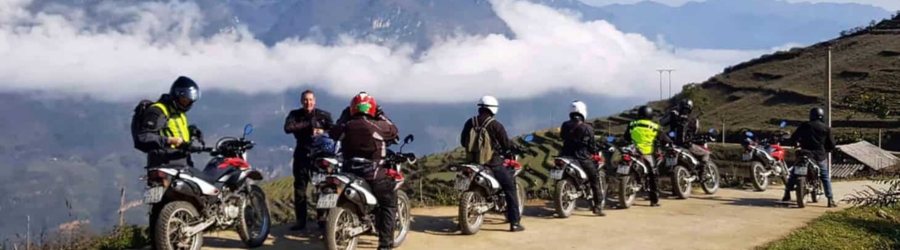
Vietnam is known for its mountain roads, winding passes, rice fields and small villages, with landscapes that change as you ride. With Vietnam by motorcycle in 2 weeks, you have enough time to visit some of the country’s must-see destinations while still leaving a few days to enjoy the journey itself. Which route should you choose? Where can you rent a motorbike? Which regions are best suited for riding, and what should you know before setting off? In this guide, you’ll find a Vietnam motorbike route map, several itinerary ideas for 2 weeks, the best regions to explore by motorbike, and essential information to help you plan your trip.
👤 Author: Nhi Nguyen
English travel marketing expert at Autour Asia.
✔️ Find the author on: Facebook Nhi Nguyen, Linkedin Nhi Nguyen, Twitter Nhi Nguyen
✅ Content verified by: Tran Ba Duy
Founder of Autour Asia, with over 20 years of experience in inbound tourism for English-speaking, European, and North American travelers.
🌏 Why trust this travel guide?
✔️ Based on organized trekking routes across Vietnam
✔️ Regularly updated to reflect the latest travel conditions, seasonal changes, prices, and local regulations.
✔️ More than 25,000 travelers served, 8,000 tailor-made tours successfully organized, and 1,500 five-star reviews from international travelers.
✔️ Written by a team of travel experts based in Vietnam, with in-depth local knowledge and first-hand expertise across Indochina's top destinations.
Vietnam by motorcycle in 2 weeks
I. Why explore Vietnam by motorbike in 2 weeks?
A motorbike gives you more freedom to travel at your own pace. With Vietnam by motorcycle in 2 weeks, you can adjust your route, stop in a village or pull over whenever you come across a beautiful view. It’s also a great way to explore the countryside, rice fields and small roads that are often left out of classic tours.
Vietnam is particularly well suited to this type of trip in the mountainous North. The roads wind through valleys, mountain passes and villages home to different ethnic communities.
However, a Vietnam motorbike tour also requires caution. Traffic can be heavy in major cities, while some mountain roads are narrow, winding or in poor condition. If you have little riding experience, it’s better to choose an easier route or travel with a local guide.
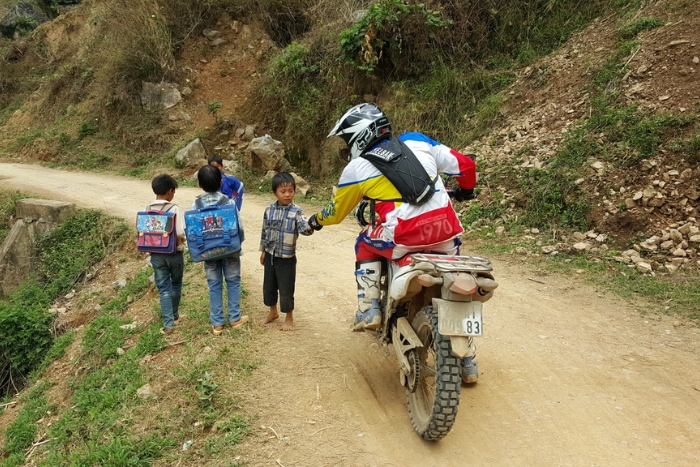
Is 2 weeks enough to ride across Vietnam ?
Yes, but you will have limited time to explore the places along the way.
Vietnam stretches more than 1,600 km from north to south, so crossing the country by motorbike means spending long hours on the road, especially if you want to take smaller, scenic roads.
With only two weeks, a large part of your trip could be spent riding. Traffic, weather and unexpected delays can also affect your schedule.
For a more enjoyable 14-day Vietnam itinerary, it is better to focus on one region and explore it at a comfortable pace.
If you want to travel from north to south, it is better to allow around three weeks or more. With 14 days, staying within one region gives you more time to enjoy the scenery, visit local sites and meet people along the way.
II. Best Vietnam motorbike routes
Vietnam has plenty of routes to explore by motorbike. In the North, the mountain passes and valleys of Ha Giang offer some of the most spectacular scenery. In Central Vietnam, the coastal roads around Hai Van Pass have a completely different atmosphere. Further south, the routes take you through the countryside, plantations and villages of the Mekong Delta.
For Vietnam by motorcycle in 2 weeks, there’s no need to try to cover all of these routes. It’s better to choose an itinerary based on the type of trip you want, your riding experience and the time you have available.
1. Ha Giang Loop
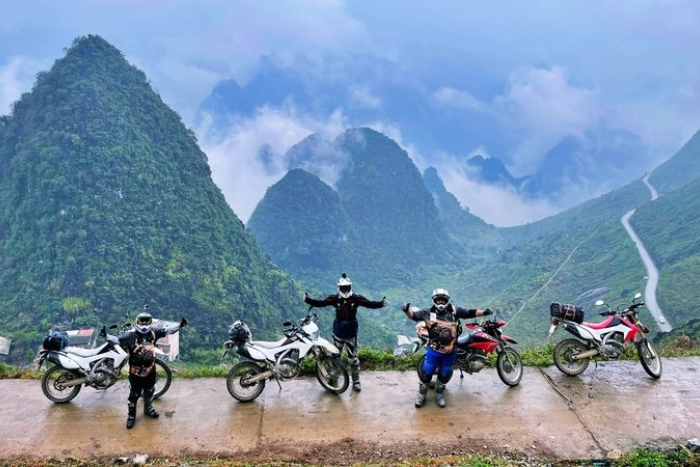
The Ha Giang Loop motorbike tour is one of the most well-known motorbike routes in Vietnam. Covering around 300 to 400 km depending on the route, it passes through Quan Ba, Yen Minh, Dong Van, Ma Pi Leng Pass, Meo Vac and Du Gia. For a 2-week trip in Vietnam by motorbike, it’s a great option if you want to spend several days exploring the mountainous landscapes of the North.
This route is ideal if you’re looking for limestone mountains, deep valleys, ethnic villages and winding roads. Plan at least 3 to 4 days to properly enjoy the loop rather than simply focusing on covering the distance.
2. Cao Bang Loop
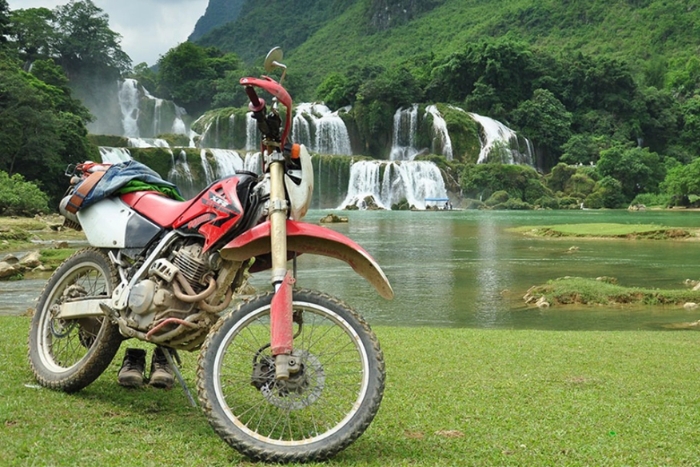
East of Ha Giang, Cao Bang offers a different experience for a 2-week north Vietnam itinerary. The route takes you through Quang Uyen, Trung Khanh, Ban Gioc Waterfall and the Phong Nam Valley.
The scenery is still very mountainous, but the atmosphere is generally more peaceful. It’s a good alternative if you want to explore Northern Vietnam by motorbike without limiting your trip to Ha Giang.
3. Hai Van Pass
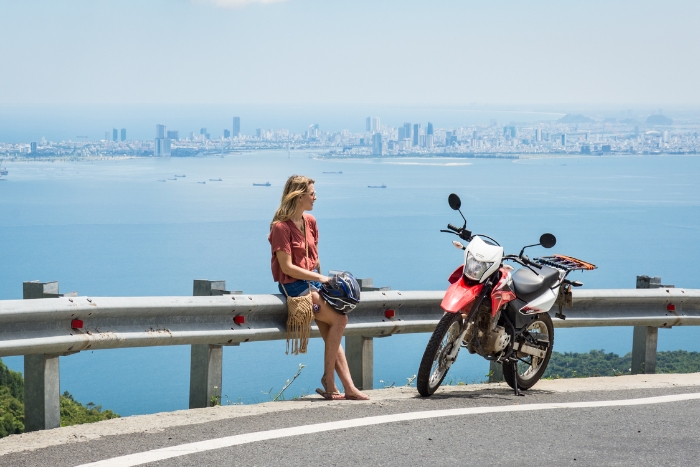
Between Hue and Hoi An, Hai Van Pass is one of the easiest motorbike routes to include in a classic Vietnam itinerary. The road follows the coast, crosses the pass and offers beautiful views over the sea.
At around 120 km including stops, this route can be completed in one day. It’s therefore a good option for travelers who want to try riding a motorbike without spending several days on a road trip.
4. Ho Chi Minh Road
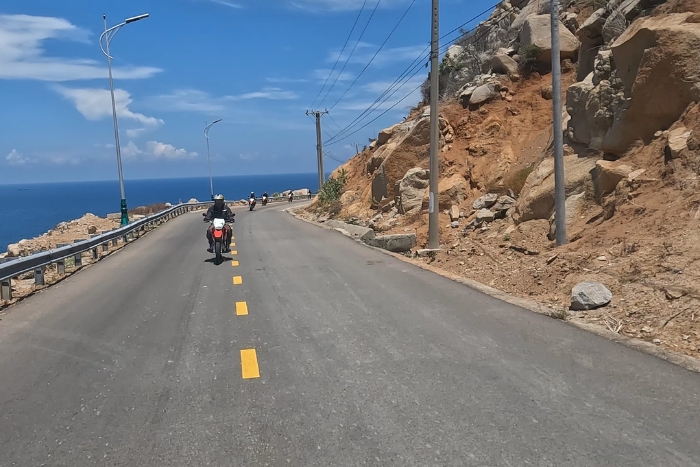
The Ho Chi Minh Road runs through the interior of Vietnam and offers an alternative to the main coastal routes. Some sections, particularly between Khe Sanh and Phong Nha, are more remote and pass through mountain and forest landscapes.
The full route is far too long to cover comfortably in Vietnam by motorcycle in 2 weeks. For a shorter trip, it’s better to choose one section rather than trying to follow the road from South to North.
5. Mai Chau, Pu Luong and Ninh Binh
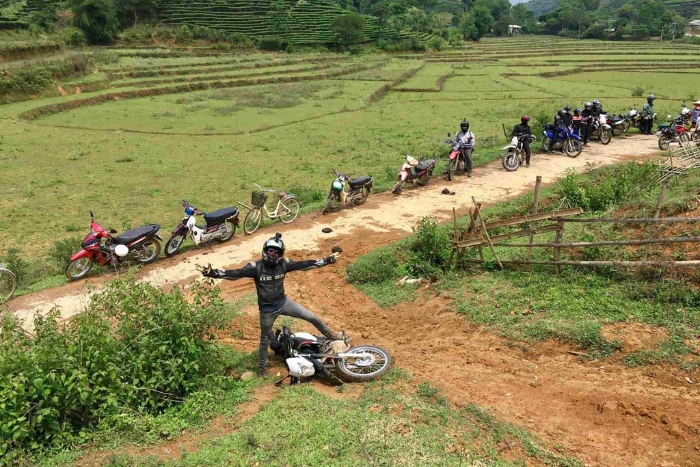
For a more relaxed 2 weeks in Vietnam itinerary starting from Hanoi, the Mai Chau – Pu Luong – Ninh Binh route combines green valleys, rice fields, local villages and peaceful countryside roads.
The scenery is less dramatic than in Ha Giang, but the pace is more relaxed. Allow around 3 to 5 days, depending on the stops and detours you choose.
6. The Mekong Delta
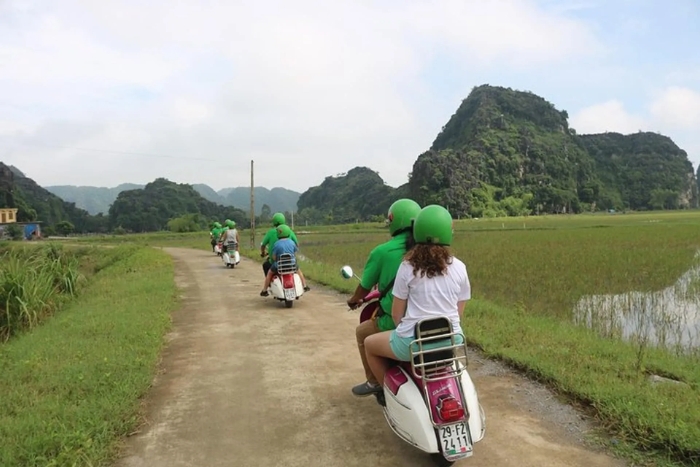
In the South, motorbike travel offers a different experience. The roads through the Mekong Delta pass orchards, rice fields, villages and numerous small waterways.
A route connecting Ho Chi Minh City, Ben Tre, Can Tho, Chau Doc and Ha Tien takes several days, but the roads are generally less challenging than those in the mountainous regions. Here, the main attraction is the rural scenery and local life rather than the riding itself.
Which regions of Vietnam are best for a motorbike trip?
Not all regions offer the same riding conditions. For Vietnam by motorcycle in 2 weeks, your choice will mainly depend on the type of scenery and roads you want to experience.
| Region | Recommended duration | What you can discover |
| Northern mountains | 4 to 7 days | Mountains, rice fields, villages, mountain passes |
| North + Northeast | 10 to 14 days | Ha Giang, Cao Bang, Ba Be |
| Central Vietnam | 5 to 7 days | Hue, Hai Van Pass, Da Nang, Hoi An |
| Central Highlands | 4 to 6 days | Plantations, mountains, villages |
| Southern Vietnam | 3 to 5 days | Countryside, Mekong Delta, rural roads |
III. Which 2-week Vietnam motorbike route should you choose?
For Vietnam by motorcycle in 2 weeks, the route you choose will mainly depend on your interests and the type of trip you’re looking for.
1. Route 1: mountains and adventure (Hanoi, Ha Giang, Cao Bang and Ba Be)
This itinerary is ideal for travelers looking for mountains, villages and rural landscapes.
| Day | Destination |
| 1-2 | Hanoi |
| 3 | Hanoi - Ha Giang |
| 4-6 | Ha Giang Loop |
| 7 | Ha Giang - Cao Bang |
| 8-9 | Cao Bang and Ban Gioc |
| 10 | Cao Bang - Ba Be |
| 11 | Ba Be - Hanoi |
| 12-14 | Hanoi ou Mai Chau, Pu Luong and Ninh Binh |
Learn more:
>>> 7 days Ba Be Cao Bang Ha Giang
>>> 1-week Cao Bang Ha Giang itinerary
2. Route 2: coast and heritage (Hue, Da Nang, Hoi An and the Central Highlands)
This itinerary offers a variety of experiences without requiring you to travel across the whole country.
| Jour | Destination |
| 1-2 | Hué |
| 3 | Hué - Lang Co - col de Hai Van - Da Nang |
| 4-5 | Da Nang et Hoi An |
| 6 | Hoi An - My Son |
| 7-8 | Hoi An - Kon Tum |
| 9-10 | Kon Tum |
| 11-12 | Kon Tum - Pleiku - Buon Ma Thuot |
| 13-14 | Buon Ma Thuot |
>>> 6 days to Pleiku Kon Tum Buon Ma Thuot
>>> 5 days to Pleiku Kon Tum Buon Ma Thuot
3. Route 3: countryside and local life (Ho Chi Minh City and the Mekong Delta)
For travelers who prefer to avoid mountain roads, the South offers another option.
| Day | Destination |
| 1 | Da Nang and Hoi An |
| 2-3 | Ho Chi Minh City |
| 4-5 | Ben Tre |
| 6-7 | Can Tho |
| 8-9 | Chau Doc |
| 10-11 | Ha Tien |
| 12-14 | Return to Ho Chi Minh City or extend your trip to Phu Quoc |
IV. Motorbike rental in Vietnam
You’ll find motorbike rental shops in most major tourist destinations, including Hanoi, Ha Giang, Hue, Da Nang, Hoi An, Da Lat and Ho Chi Minh City.
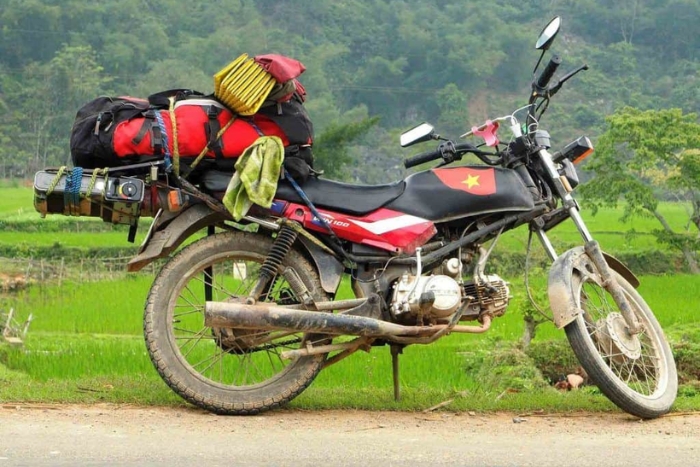
Before setting off, always check the condition of the motorbike. Test the brakes, tires, lights, turn signals, horn and mirrors. It’s also a good idea to take a few photos of the bike before renting it.
1. Which type of motorbike should you choose?
For city roads and easy routes, an automatic scooter is usually enough.
For rural and mountain roads, a semi-automatic motorbike is often more versatile. Manual bikes are better suited to riders who are already comfortable with this type of vehicle.
Your choice should mainly depend on your riding experience. It’s better to choose a simple motorbike that you know how to handle than a more powerful model you’re not familiar with.
2. What should you check before setting off?
Be sure to ask about :
- The daily rental price ;
- The security deposit amount ;
- What happens in case of a breakdown;
- The documents provided by the rental company;
- The condition of the tires and brakes;
- Whether the mirrors and lights are working properly;
- The conditions for returning the motorbike.
Also, take some time to test the motorbike before leaving the city.
V. Useful information for a 2-week motorcycle tour in Vietnam
1. Motorbike rental requirements in Vietnam
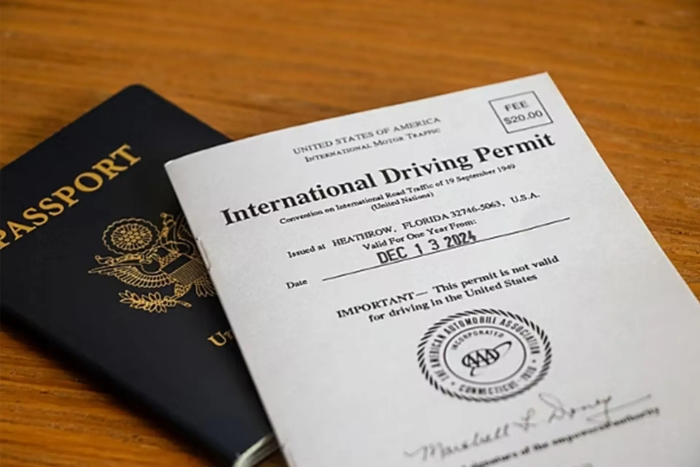
To legally ride a motorbike in Vietnam, you need a valid license for the type of motorbike you are riding. A standard car license is not enough.
Vietnam recognizes International Driving Permits (IDPs) issued under the 1968 Vienna Convention. This is important to check before your trip, as some countries, including the United States, Canada and Australia, commonly issue IDPs under the 1949 Convention, which are not recognized in Vietnam.
In practice, some travelers still rent motorbikes without the required license. Rental shops do not always check the documents, and police checks may be less frequent in some tourist areas.
The main concern, however, is insurance. If you have an accident without the required license and IDP, your travel insurance may refuse to cover the costs. In the event of a serious accident, these expenses can be very high.
2. When is the best time to go?
The best time to travel depends on the region you choose. Vietnam’s climate varies considerably between the North, Central and South.
North (Ha Giang, Sapa, Cao Bang): March to May and September to November are generally the best months. Winter can be cold and foggy, while summer brings more frequent heavy rain.
Central Vietnam (Hue, Da Nang, Central Coast): February to August is generally the most pleasant period. Rainfall increases in October and November.
South (Ho Chi Minh City, Mekong Delta): The dry season, from December to April, is ideal for motorbike trips. From May to October, rain is more frequent, but showers are often short and heavy.
If your route includes Hanoi, the northern mountains, Hue, Hoi An and the South, March to mid-April is a good overall period to consider. However, weather conditions can vary from year to year, especially in mountainous areas.
3. What to pack for a motorbike trip?
Travel light, especially for a backpacking trip to Vietnam. A large suitcase can be difficult to carry on a motorbike.
Make sure to bring:
- a light waterproof jacket for unexpected rain;
- gloves for better grip and comfort;
- a power bank for long days on the road;
- a small backpack instead of bulky luggage;
- straps to secure your belongings to the motorbike.
The key is to pack light. The less luggage you carry, the easier and more comfortable riding will be.
4. Should you travel alone or with a guide?
It mainly depends on your riding experience.
If you’re used to long motorbike trips, you can plan an independent journey on carefully chosen routes.
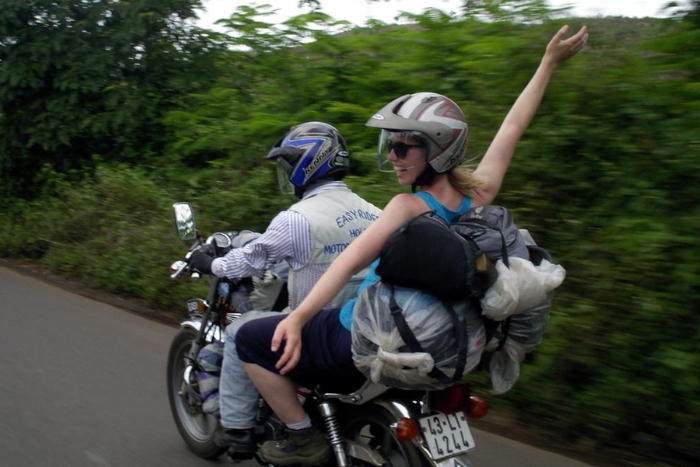
If you prefer not to ride yourself, you can hire an Easy Rider. This is a local rider who takes you on the back of their motorbike and knows the roads, traffic conditions and good places to stop.
It’s a good option if you have little riding experience, feel uncomfortable with traffic, or simply want to enjoy the scenery without worrying about navigation. This option is particularly common in Ha Giang and the Central Highlands.
A trip to Vietnam by motorcycle in 2 weeks gives you several options, depending on the regions you want to explore and the amount of time you want to spend on the road. You can focus on the mountains and rural landscapes of the North, explore the historic sites and coastal areas of Central Vietnam, or combine several destinations at a faster pace. Traveling across the whole country is also possible, but it means covering longer distances and allowing less time at each stop. Before setting off, check your driving licence, insurance, motorbike condition and the weather conditions along your route.
To plan a custom 2-week Vietnam itinerary, Autour Asia, a travel agency in Vietnam, can also help you organize your trip.
>>> Vietnam 2 semaines entre amis
>>> Vietnam de 2 semaines pour seniors
>>> Guide voyage Vietnam
>>> 15 days au Vietnam
>>> Circuits Vietnam
The Ha Giang Loop is one of the most famous motorbike routes in Vietnam. Located in the far north, the roughly 350-kilometer loop passes through Quan Ba, Yen Minh, Dong Van and Meo Vac before returning to Ha Giang City. The route is known for its dramatic limestone mountains, winding mountain roads, ethnic minority villages and spectacular passes, especially Ma Pi Leng Pass. Most travelers spend around 3 to 4 days completing the loop. Other well-known routes include the Hai Van Pass between Hue and Da Nang and sections of the Ho Chi Minh Road, but the Ha Giang Loop is particularly popular for a multi-day motorcycle adventure.
If you are wondering how much money you need for 2 weeks in Vietnam, the answer depends on your travel style. On average, a budget traveler should plan to spend about $49 per day, which covers accommodation, meals, transportation, and activities. That comes to around $700 for the full two weeks. If you include international flights, the total budget usually ranges between $1,700 and $2,500 per person. This means that with careful planning, a trip can be both affordable and enjoyable, whether you choose budget-friendly options or add a touch of comfort.
The best time for a Vietnam by motorcycle in 2 weeks trip depends on the route you choose. For a cross-country journey, February to April and October to November generally offer more comfortable riding conditions, with milder temperatures and less rainfall in many areas. However, Vietnam has a long, narrow geography, so the weather can vary considerably from one region to another. The North can be cool in winter, while Central Vietnam may experience rain during the autumn months. Before setting off, check the weather forecast for each destination and adjust your route if needed. This can make your two-week motorcycle trip more comfortable and enjoyable.
Related travel guide
Other similar articles


CUSTOMIZABLE BY LOCAL EXPERTS
Personalized trip at the original price!

REFUND GUARANTEE
We believe in our work and promise to give you money back.

GOOD PRICE / QUALITY
95% satisfied more than expected!

24/7 LOCAL SUPPORT
We are always available online to provide assistance at any time.

Most read articles


Autour Asia is highly recommended on
Embracing the mission of "Satisfied more than expected" and providing authentic experiences, we have received numerous recommendations on reputable travel forums: