
The Best 3 Weeks In Vietnam Itinerary With Beaches - Our Travel Guide
A 3 weeks in Vietnam with beach itinerary allows you to combine cultural discoveries, natural landscapes, and a few days of seaside relaxation, without turning the trip into a succession of transfers. In 21 days, it is possible to start in Hanoi, discover Ha Long Bay or Lan Ha Bay, continue to Hue and Hoi An, then head south before ending with a beach destination suited to the season. But where should you go to the beach in Vietnam? The answer depends mainly on the time of year: Phu Quoc is particularly suitable during the dry months in the South, while Da Nang, Hoi An, or Quy Nhon are good options during part of the year. To build a coherent itinerary, the Vietnam travel agency - Autour Asia can also adapt the stops to each traveler's pace and preferences.
👤 Author: Noah
English travel marketing expert at Autour Asia.
✔️ Find the author on: Facebook Noah, Linkedin Noah, Twitter Noah
✅ Content verified by: Tran Ba Duy
Founder of Autour Asia, with over 20 years of experience in inbound tourism for English-speaking, European, and North American travelers.
🌏 Why trust this travel guide?
✔️ Based on real tours organized by our local team across Vietnam, Cambodia, Thailand, Laos, Bali, and Myanmar.
✔️ Regularly updated to reflect the latest travel conditions, seasonal changes, prices, and local regulations.
✔️ More than 25,000 travelers served, 8,000 tailor-made tours successfully organized, and 1,500 five-star reviews from international travelers.
✔️ Written by a team of travel experts based in Vietnam, with in-depth local knowledge and first-hand expertise across Indochina's top destinations.
Table of Contents
- I. How to organize a 3 weeks in Vietnam with beach itinerary?
- II. What itinerary should you follow for 3 weeks in Vietnam with a beach stay?
- III. Where should you spend the final part of your trip at the beach in Vietnam?
- IV. What type of stay is this 3-week Vietnam itinerary suitable for?
- V. How can you adapt this itinerary according to your preferences?
- VI. What budget should you plan for 3 weeks in Vietnam with a beach stay?
- VII. Our tips for a successful 3-week trip to Vietnam with a beach stay
I. How to organize a 3 weeks in Vietnam with beach itinerary?
1. How many days should you spend on the beaches in Vietnam?
For a 3 weeks in Vietnam with beach itinerary, planning 4 to 6 days by the sea offers a good balance for a first trip. This leaves around two weeks to discover the country's major cultural and natural highlights, while still keeping several days without intensive sightseeing. The Vietnam travel agency - Autour Asia can help you adjust this distribution according to the season and your preferred pace.
There is no need to spend an entire week at the beach if your main goal is to discover Vietnam. Four days can be enough to enjoy a resort, swim, take a boat excursion, or simply recover after traveling between destinations.
On the other hand, travelers mainly looking for relaxation can spend five or six days by the sea. In this case, it is better to reduce some land-based stops rather than constantly adding new destinations.
2. Should you end your trip with a beach stay in Vietnam?
Ending your trip at the beach is not a mandatory rule, but this organization has a practical advantage: it allows you to gradually slow down after sightseeing and traveling. After Hanoi, Ha Long Bay, Hue, Hoi An, and the South, a few days by the sea provide a genuine break.
This formula works particularly well for couples and families, but it depends on the weather. If the chosen beach destination is experiencing its rainy season during your trip, it is better to place the beach stay elsewhere in the itinerary or choose another region.
3. Adapt your itinerary to the season in Vietnam
The best beach is not the same all year round. This is the key point to remember when organizing a 3 weeks in Vietnam with beach itinerary.
From November to April: the South generally becomes more appealing. Phu Quoc benefits from a favorable period with more sunshine and conditions better suited to beach activities. The dry season in the South generally lasts from December to April, while Phu Quoc experiences its best conditions between October and June.
From April to August: the Central region offers more possibilities. Da Nang, in particular, experiences a period with little rain and clear, calm seas between June and August. Hoi An also benefits from warm and sunny conditions from February to August.
From May to September: Quy Nhon is an interesting alternative, especially for travelers looking for a quieter atmosphere. Vietnam Tourism indicates a particularly favorable coastal period from May to September.
From September to October: greater caution is needed in Central Vietnam, as the wet season gradually begins. Hoi An, in particular, becomes more exposed to rainfall from September onward.
The destination should therefore be chosen after checking the season, rather than solely according to its tourist reputation.

II. What itinerary should you follow for 3 weeks in Vietnam with a beach stay?
Here is a balanced 3 weeks in Vietnam with beach itinerary proposal designed for a first trip from North to South.
1. Days 1 to 4: Hanoi and surroundings
Start with Hanoi to discover the Old Quarter, Hoan Kiem Lake, the markets, local cuisine, and several cultural sites. Four days allow you to explore without rushing too much and keep one day for an excursion to the surrounding area if you wish.
2. Days 5 to 7: Ha Long Bay or Lan Ha Bay
A two-night cruise provides a different experience after the lively atmosphere of Hanoi. Lan Ha Bay can be an alternative to Ha Long Bay depending on the chosen itinerary. This stop combines karst landscapes, cruising, and time for relaxation.
3. Days 8 to 10: Hue and Hoi An
Fly to Central Vietnam and spend part of your stay in Hue and Hoi An. Hue allows you to discover imperial heritage, while Hoi An combines the old town, cuisine, cycling, and proximity to the sea.
4. Days 11 to 14: Ho Chi Minh City and the Mekong Delta
Continue south to discover Ho Chi Minh City, then spend one or two days in the Mekong Delta. This part offers an important contrast with the North and Central regions: markets, waterways, orchards, and rural life.
5. Days 15 to 20: Phu Quoc, Quy Nhon, or Da Nang
The final six days are reserved for the beach, but the choice depends on the season.
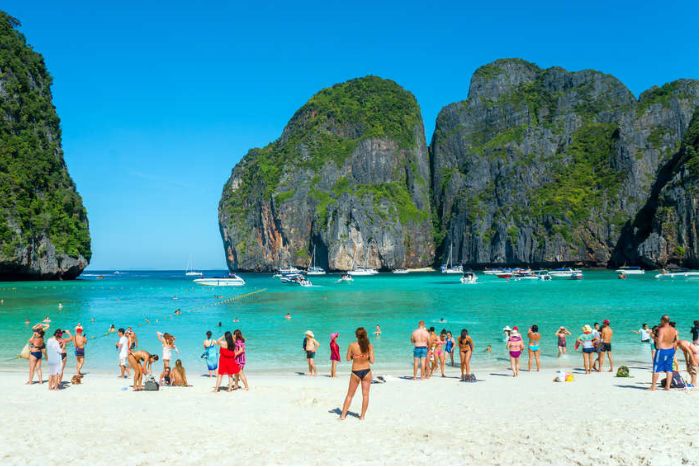
During the favorable season in the South, Phu Quoc allows you to end your trip with several relaxing days in a tropical environment.
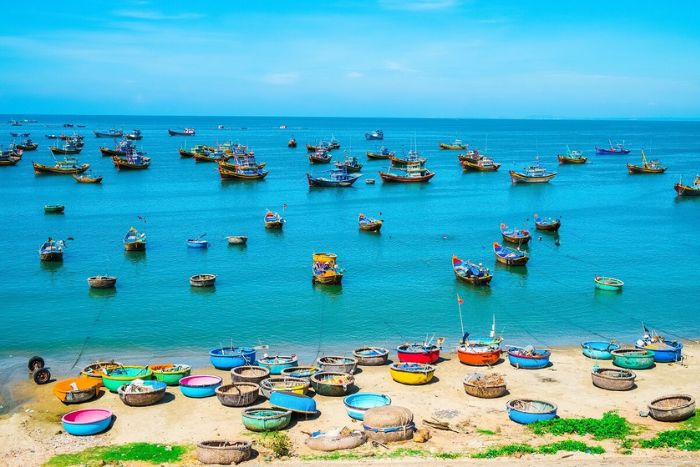
During the favorable season in Central Vietnam, Quy Nhon may suit travelers looking for greater tranquility, while Da Nang is convenient for combining beaches, restaurants, excursions, and air access.
The idea is therefore not to add all these destinations, but to choose just one according to the weather and your preferred pace.
6. Day 21: Return to the airport in Ho Chi Minh City
Keep this final day as simple as possible. If your international flight departs from Ho Chi Minh City, allow enough time to reach the airport. When the beach destination is located on an island, an additional buffer day can even be wise to reduce the risk associated with transportation delays.
To compare this proposal with other itineraries, also consult our 21-day Vietnam itinerary.
III. Where should you spend the final part of your trip at the beach in Vietnam?
Rather than repeating the itinerary, here is a comparison to help you choose your final beach destination:
Destination | Ideal for | Duration | Indicative best period | Atmosphere |
Phu Quoc | Resort, snorkeling, relaxation | 4-5 days | October-June, especially the dry season | Tropical |
Quy Nhon | Peace, nature, beaches | 3-4 days | May-September | Authentic |
Nha Trang | Beach + activities | 3-4 days | January-August | Lively |
Da Nang | Beach + culture | 3-4 days | June-August for the sea | Easy & versatile |
Phu Quoc is particularly appealing when conditions are favorable: the island has several beaches and enjoys a warm climate all year round, with a drier season from autumn to spring. The July-September period is, however, more exposed to rain and storms.
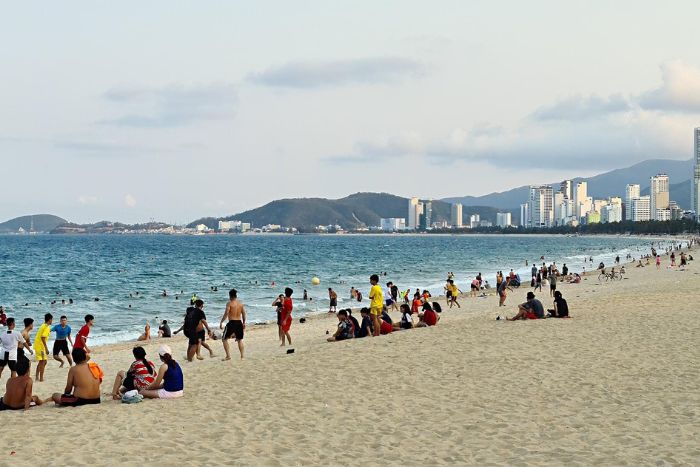
Nha Trang is an interesting option for those who want to combine beaches and activities, with a generally sunnier period from January to August.
For a first three-week trip to Vietnam, Phu Quoc is therefore an excellent choice if the season is favorable, while Da Nang is more versatile for an itinerary focused on Central Vietnam.

IV. What type of stay is this 3-week Vietnam itinerary suitable for?
1. For a first trip to Vietnam
This itinerary is particularly suitable for those who want to discover several regions without giving up a few days of relaxation. It allows you to experience the country's main contrasts while keeping a genuine beach break.
You can also consult our Vietnam 3 weeks page to compare different travel styles.
2. For a couple
A 3 weeks in Vietnam for couples itinerary can easily include more free time in Hoi An or at a beach resort. Ending the trip in Phu Quoc, Quy Nhon, or Da Nang also allows you to finish the journey at a more relaxed pace.
3. For a family
With children, it is preferable to limit hotel changes and prioritize stays of several nights at each destination. The beach then becomes a genuine time for recovery. Our guide dedicated to Vietnam 3 weeks with family provides more details on this approach.
4. For those who mainly want to relax
If the beach is the main objective, it is possible to reduce the number of sightseeing stops. For example, removing one urban destination allows you to gain two or three additional nights in the chosen beach destination.
To discover a real travel experience, you can also consult this Vietnam 3-week itinerary review, which shows how a long trip can be organized according to a family's expectations.
V. How can you adapt this itinerary according to your preferences?
A 3 weeks in Vietnam with beach itinerary can be built in many different ways. The proposed route is only a starting point.
If you enjoy culture and heritage: Keep Hanoi, Hue, and Hoi An and, if necessary, reduce the beach portion to four days. You can also spend more time in the historic cities rather than multiplying excursions.
If you prefer nature and landscapes: Ninh Binh can replace part of the time spent in the major cities. Karst landscapes, boat trips, and cycling routes bring another dimension to the journey.
If you want more beach time: Reduce the number of stops. It is better to spend five or six nights in one beach destination suited to the season than to visit two beaches for only two days each.
If you are looking for a more authentic trip: Prioritize local markets, villages, activities with local residents, and shorter stops. A three-week trip leaves enough time to move beyond the most classic tourist routes.
You can also take inspiration from a Vietnam 3-week small-group trip to see how a 21-day itinerary can combine the North, Central, and South regions while maintaining a logical progression.

VI. What budget should you plan for 3 weeks in Vietnam with a beach stay?
The budget mainly depends on the level of accommodation, the number of domestic flights, excursions, and the chosen beach destination. For a three-week trip excluding international flights, here are indicative amounts per person:
Travel style | Indicative budget / person | What it generally includes |
Budget | $1,000-$1,400 | 2-3-star hotels, local restaurants, public or shared transportation, simple activities |
Comfort | $1,600-$2,200 | 3-4-star hotels, domestic flights, guided excursions, regular transfers |
High-end | $2,500-$3,500 and more | Boutique hotels or resorts, private transfers, private excursions, premium cruise |
For comparison, an Autour Asia estimate for three weeks in a reasonably comfortable style, excluding international air transportation, comes to around $1,900 per person. A high-end trip can reach approximately $2,850, depending on the services selected.
The beach stay can affect the budget: a simple hotel in Quy Nhon does not represent the same expense as a high-end resort in Phu Quoc. Private transfers and water-based excursions can also quickly increase the final cost.
For more information, consult our article on the Vietnam travel budget and the detailed estimate of the Vietnam 3-week budget.
VII. Our tips for a successful 3-week trip to Vietnam with a beach stay
1. Do not overload your itinerary
Twenty-one days may seem long, but Vietnam stretches more than 1,600 km from North to South. Adding too many stops can turn the trip into a succession of transfers.
2. Plan your domestic flights
To quickly connect the North, Central, and South regions, domestic flights are often more practical than long overland journeys.
3. Book your beach destination according to the weather
Before confirming your resort, check the conditions in the region for the exact dates of your trip. A famous beach is not necessarily the best option during its rainy season.
4. Keep a buffer day
This precaution is particularly useful when an island requires a boat transfer or when your international flight is scheduled shortly after a domestic journey.
5. Alternate sightseeing and free time
After two or three days of sightseeing, plan a quieter half-day. The trip will be more enjoyable, and you will make better use of your time at the beach.
6. Choose your beach destination before booking domestic flights
For a three-week trip covering several regions and including a beach stay, organizing transfers, domestic flights, and accommodation can quickly become complex. Working with a local English-speaking travel agency in Hanoi allows you to benefit from advice adapted to current conditions and build a coherent itinerary according to the season, budget, and desired pace. It is also convenient for adjusting certain stops in case of a change in plans or weather conditions.
A 3 weeks in Vietnam with beach itinerary is an excellent way to discover the country while keeping several days dedicated to relaxation. However, the key is not to look for the most famous beach, but the one that actually matches the season of your trip. Phu Quoc is particularly interesting when the South enjoys favorable conditions, while Da Nang, Hoi An, or Quy Nhon may be more suitable during certain periods of the year. For the rest of the itinerary, Hanoi, Ha Long Bay or Lan Ha Bay, Hue, Hoi An, Ho Chi Minh City, and the Mekong Delta make it possible to create a varied 21-day itinerary. If you would like to adjust the stops, transportation, accommodation, and time spent by the sea, the Vietnam travel agency - Autour Asia can help you design a trip that matches your season, budget, and pace.
You can refer to:
Yes, a 2-week Thailand Vietnam trip is possible, provided that you limit the number of stops. To enjoy both countries without spending too much time in transit, it is preferable to choose two or three destinations in each country. For example, Bangkok and Chiang Mai can be combined with Hanoi and Hoi An, or Bangkok with Ho Chi Minh City and a Vietnamese beach destination. Flights between the two countries save time, but you must also take entry requirements and transfer times into account. For a first trip, it is better to prioritize a few representative experiences rather than trying to visit both countries in their entirety.
A Vietnam backpacking trip is particularly suitable for travelers who want to explore the country with greater freedom and a controlled budget. Major cities such as Hanoi, Hue, Hoi An, and Ho Chi Minh City offer many affordable accommodation options and transportation solutions that make it easy to travel between different stops. Traveling with a backpack also allows you to modify your itinerary along the way, prioritize certain regions, or extend a stay according to your preferences. For a first experience, however, it is advisable to make a few reservations in advance for important journeys and peak travel periods, while keeping enough flexibility to fully enjoy the trip.
Yes, a 3 weeks in Vietnam with beach itinerary can be very suitable for a family with teenagers, particularly if the trip alternates cultural discoveries, outdoor activities, and free time. Teenagers can enjoy a variety of experiences such as kayaking, boat trips, exploring local markets, or water activities along the coast. To avoid making the trip too repetitive, it is useful to keep a few days without a fixed schedule so that everyone can choose their own activities. This organization allows you to discover several sides of Vietnam while making the beach a genuine experience in its own right, rather than simply a succession of days spent swimming.
Related travel guide
Other similar articles


CUSTOMIZABLE BY LOCAL EXPERTS
Personalized trip at the original price!

REFUND GUARANTEE
We believe in our work and promise to give you money back.

GOOD PRICE / QUALITY
95% satisfied more than expected!

24/7 LOCAL SUPPORT
We are always available online to provide assistance at any time.

Most read articles


Autour Asia is highly recommended on
Embracing the mission of "Satisfied more than expected" and providing authentic experiences, we have received numerous recommendations on reputable travel forums: