
Vietnam In 2 Weeks In March - How To Plan Your Itinerary?
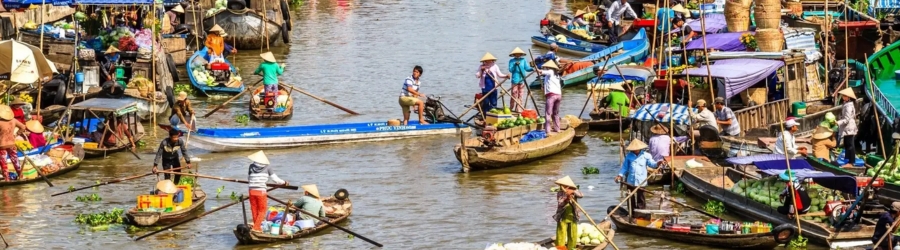
March is a transition month between seasons in Vietnam and one of the most pleasant times of year, especially for outdoor activities. This makes Vietnam in 2 weeks in March a popular choice, although some destinations can be more crowded during this period. So how can you plan your itinerary to make the most of the weather while avoiding overly busy places? In this article, discover what to expect in Northern, Central and Southern Vietnam in March, along with several two-week itinerary ideas and practical tips to help you prepare for your trip.
👤 Author: Nhi Nguyen
English travel marketing expert at Autour Asia.
✔️ Find the author on: Facebook Nhi Nguyen, Linkedin Nhi Nguyen, Twitter Nhi Nguyen
✅ Content verified by: Tran Ba Duy
Founder of Autour Asia, with over 20 years of experience in inbound tourism for English-speaking, European, and North American travelers.
🌏 Why trust this travel guide?
✔️ Based on organized trekking routes across Vietnam
✔️ Regularly updated to reflect the latest travel conditions, seasonal changes, prices, and local regulations.
✔️ More than 25,000 travelers served, 8,000 tailor-made tours successfully organized, and 1,500 five-star reviews from international travelers.
✔️ Written by a team of travel experts based in Vietnam, with in-depth local knowledge and first-hand expertise across Indochina's top destinations.
Vietnam in 2 weeks in March
I. March in Vietnam at a glance
When to visit Vietnam for 2 weeks? March marks the beginning of a particularly favorable period for 2 weeks in Vietnam, with generally pleasant weather, colorful landscapes and a transition between seasons. Conditions vary across the country: the North can still be cool and misty, while the Center and South are generally warmer, drier and sunnier, making them well suited to outdoor activities.
| Region | Weather in March | Approximate temperatures | What to expect | Where to visit? |
| North | Cool, sometimes overcast and hazy | ~10-25°C depending on location | Still-changeable climate | Hanoi, Ninh Binh, Halong Bay, mountains |
| Center | Mild to warm, generally drier | ~20-30°C | Good conditions for sightseeing | Hue, Hoi An, Da Nang, beach |
| South | Warm, dry and sunny | ~25-35°C | Dry season | Ho Chi Minh City, Mekong, Phu Quoc |
II. Which region to choose for Vietnam in 2 weeks in March?
1. The North: for scenery and Vietnamese culture
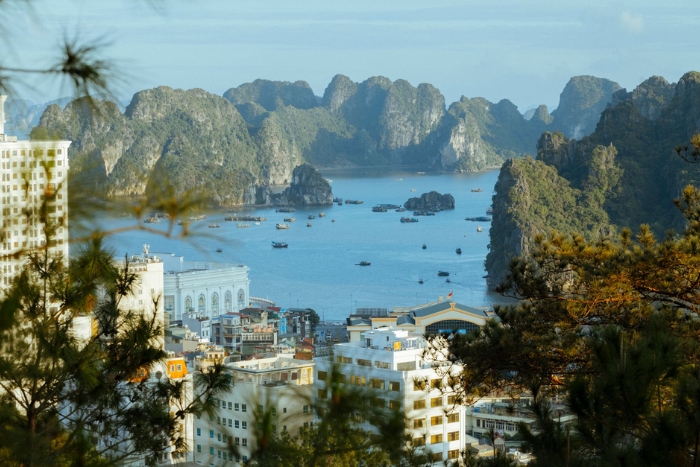
The North is the coolest part of the country in March. Hanoi and Halong Bay can still see cool, cloudy or hazy days. In the mountains, such as Sa Pa, temperatures are even lower.
That doesn't mean you should avoid the North. On the contrary, this period suits travelers who prefer walking and visiting cultural sites without intense heat.
A trip to Vietnam in 2 weeks in March can start in Hanoi, then continue to Mai Chau and Pu Luong, two destinations at higher elevations than the capital, where temperatures are cooler in March. In Pu Luong, the rice terraces begin turning green in early spring, while Mai Chau offers beautiful valley and mountain scenery. Then continue to Ninh Binh for its karst landscapes and a boat trip. Finally, a cruise in Halong Bay or Lan Ha Bay lets you unwind.
That said, if your priority is sun and beach time, the North may not be the best choice in March.
2. The Center: a good balance between heritage and outdoor activities
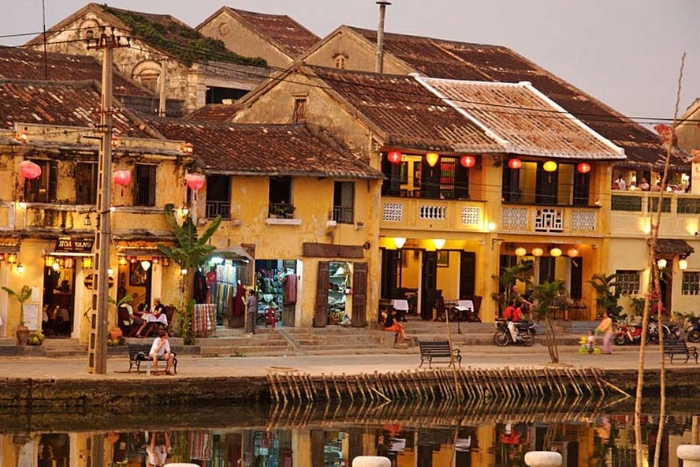
The Central region becomes more appealing from March onward. It allows you to vary your activities without spending too much time on the road. Hue, Da Nang and Hoi An are relatively close to one another, so you can easily go from Hue’s imperial citadel to Da Nang’s beaches, then explore Hoi An’s old town, with its historic houses, small villages and bougainvillea in full bloom in March, adding a splash of color to the streets.
For a Vietnam in 2 weeks in March trip, the Center pairs particularly well with either the North or the South.
3. The South: for warmth, the Mekong and beaches
In March, the South is in the middle of its dry season. Ho Chi Minh City and the Mekong Delta usually experience warm, sunny weather, with temperatures around 30°C.
This region is a good choice for travelers looking for warm weather and outdoor activities.
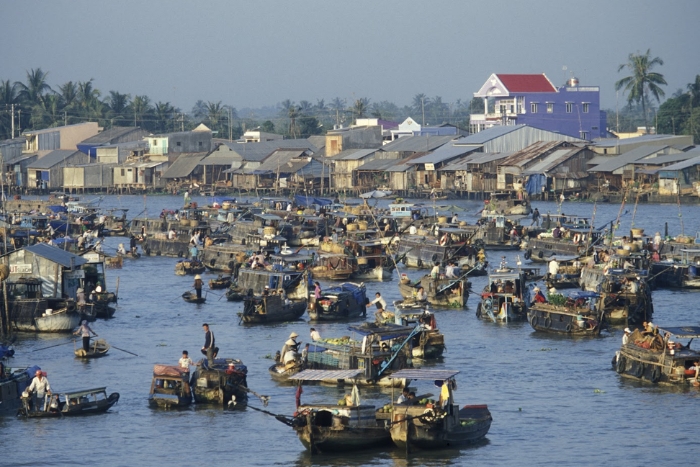
After a few days in Ho Chi Minh City, head to the Mekong Delta to explore its markets, orchards and small canals by boat or sampan. In March, some rice fields around Tra Vinh are already turning golden, making them ideal for a cycling trip through the countryside. If you want to end your trip by the beach, Phu Quoc is also a good option, with generally dry and sunny weather.
The choice mainly depends on what you want to experience during your two weeks.
Scenery, culture and cooler weather --> North
Heritage, food and beaches --> Center
Warmth, the Mekong and a beach stay --> South
First trip wanting a mix of experiences --> North + Center or Center + South
The goal isn't to find one perfect region for everyone. In March, it's mostly about matching each region's weather with the type of experience you're after.
III. Three ways to experience 2 weeks in Vietnam in March
1. Option 1: North + Center
> Choose this if you like: culture, scenery, food and a balanced pace.
This is a good combination for a first trip. It brings together the North’s scenery and the Center’s heritage without having to travel across the whole country. You can spend around a week in the North, then fly to Da Nang before continuing to Hoi An and Hue.
In March, the Center generally offers more favorable weather, while the North has a cooler atmosphere and can still be hazy at times.
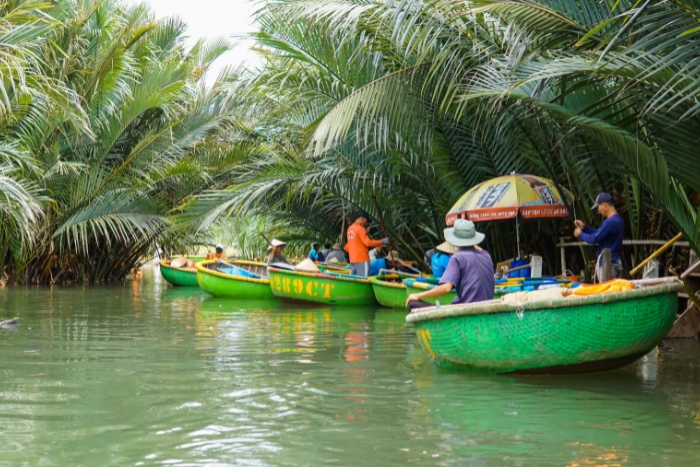
2. Option 2: Center + South
> Choose this if you like: sunshine, heritage, food and the sea.
This option is better suited to travelers who want to avoid the North’s cooler temperatures. The trip starts in the Center with Hoi An and Hue, then heads south before ending in the Mekong Delta or with a few days on Phu Quoc.
For a Vietnam in 2 weeks in March trip, plan 3 days in Hoi An, 2 days in Hue, 1 day in Da Nang, 3 days in Ho Chi Minh City, 2 days in the Mekong Delta and 3 days on Phu Quoc.
It is also a good way to combine heritage and beach time. In March, the South is generally hot and dry, while Hoi An and Da Nang offer favorable conditions for outdoor sightseeing.

3. Option 3: North to South
> Choose this if you want to: see several sides of Vietnam on a first trip.
For 14 days, plan 3 days in Hanoi, 2 days in Ninh Binh, 1 night on a Halong Bay cruise, 2 days in Hue, 2 days in Hoi An, 2 days in Ho Chi Minh City and 2 days in the Mekong Delta.
This option allows you to discover the North, Center and South in one trip, but the tighter schedule leaves less time to explore each destination in depth.

4. How to plan 2 weeks in Vietnam in March smartly?
For a 2 week Vietnam itinerary South to North itinerary, start by choosing regions based on the weather and what you want to do, then group nearby destinations together. Favor domestic flights for long distances and avoid adding too many stops. Two to three days per destination generally keeps a comfortable pace, with enough time to sightsee without spending the whole trip in transit.
IV. What to know before traveling to Vietnam in March?
1. What to do in Vietnam in March?
What are the best places to visit in Vietnam in March? March favors outdoor activities, but the experience varies by region.
In the North, make the most of the cooler days to visit Hanoi, explore Ninh Binh or go hiking in the mountains. For Halong Bay, just keep in mind that March can still be cool, cloudy and hazy.

In the Center, March is especially good for walking and cycling tours. In Hoi An, early in the month usually brings sunny days and pleasant temperatures for exploring the old town, rice fields and surrounding area.
In the South, you can spend more time on outdoor activities: exploring Ho Chi Minh City, taking a Mekong Delta excursion or spending time on Phu Quoc.
If your Vietnam in 2 weeks in March trip coincides with a local festival, check the calendar before booking. For example, in Hoi An, the Nguyen Tieu festival takes place around the first full moon of the lunar calendar; in 2027, it's expected around February 20-22.
2. What budget to plan for 2 weeks?
The Vietnam 2 weeks travel budget mainly depends on your level of accommodation, the number of domestic flights and the excursions you plan.
As a rough guide, budget around €40 to €85 per day per person for a comfortable trip, depending on your hotels, meals and chosen activities. For 14 days, that comes to around €560 to €1,190 per person, excluding international flights.
The budget can rise if you choose upscale hotels, several domestic flights, private excursions or activities like a Halong cruise.
On the other hand, local meals and getting around town generally remain affordable.
3. What to pack for March?
What to pack for Vietnam? What you pack depends directly on your itinerary.
If you're only visiting the Center and South, light clothing is generally enough, along with a light jacket for evenings or air-conditioned transport.
If you're starting in Hanoi, Ninh Binh or the northern mountains, add a warmer jacket. Temperatures can still drop noticeably in the North in March, especially at higher elevations.
In any case, pack:
comfortable shoes
light, breathable clothing
a light jacket
sun protection
a small rain jacket
a swimsuit if your itinerary includes the coast or an island

4. What mistakes to avoid?
Trying to see everything in 14 days: Vietnam looks easy to cover on a map, but the distances are significant. Adding one more destination can sometimes mean half a day of travel.
Packing the same bag for the whole country: A Hanoi-Ninh Binh-Hoi An-Phu Quoc trip can start with a jacket and end in beachwear.
Choosing your itinerary without checking the weather: In March, the differences between regions are significant enough to influence which stops you choose.
Taking too many domestic flights: A flight saves time over long distances, but every hotel change, airport transfer and check-in also cuts into the time you actually spend exploring a destination.
Booking every single day in advance: 2 weeks in Vietnam in March doesn't mean you need to fill fourteen full days. Leaving a few free half-days lets you enjoy a coffee, a market, or simply slow down.
>>> 2-week food itinerary in Vietnam
>>> 2-week Vietnam itinerary for seniors
>>> 2 weeks in Vietnam with friends
Vietnam in 2 weeks in March can take very different shapes. The North brings a cooler atmosphere and mountain and karst scenery, the Center offers good conditions for combining heritage and outdoor activities, while the South suits those looking for warmth, the Mekong and beaches. For two weeks, it's generally more coherent to choose two main regions rather than adding too many stops. Once that choice is made, it's simply a matter of grouping nearby destinations and using domestic flights only when the distances justify it.
For more comfort, you can turn to Autour Asia, a travel agency in Vietnam, to arrange certain hotels, transfers or excursions while keeping your freedom. A tailor-made private tour lets you shape the trip around your own pace, wishes and budget.
>>> 2 weeks in Vietnam in December
>>> 2 weeks in Vietnam for women
>>> Vietnam Travel Guide
>>> Vietnam holiday tour packages
>>> Vietnam Tours
To plan a Vietnam itinerary 2 weeks, it is helpful to understand the ideal weather for a cruise in Ha Long Bay. The best time is from March to May, and again from October to December, when the climate is mild, humidity is moderate, and the sea is generally calm. These conditions provide excellent visibility to admire the limestone karst landscapes and enjoy activities such as kayaking or cave exploration. In summer, tropical rains and high temperatures can disrupt cruises, while winter sometimes brings fog, creating a mystical atmosphere that many travelers appreciate.
Yes, March is a good time to visit Vietnam. For a Vietnam in 2 weeks in March itinerary, you can combine several regions while adapting the route to the different weather conditions. The Centre and South are usually warm, dry and sunny, making this month suitable for sightseeing and outdoor activities. The North is cooler and can still be cloudy or misty, especially in Hanoi and Halong Bay. It is also worth booking popular destinations and accommodations in advance, as March can attract more visitors.
Related travel guide
Other similar articles


CUSTOMIZABLE BY LOCAL EXPERTS
Personalized trip at the original price!

REFUND GUARANTEE
We believe in our work and promise to give you money back.

GOOD PRICE / QUALITY
95% satisfied more than expected!

24/7 LOCAL SUPPORT
We are always available online to provide assistance at any time.

Most read articles


Autour Asia is highly recommended on
Embracing the mission of "Satisfied more than expected" and providing authentic experiences, we have received numerous recommendations on reputable travel forums: