
What Should You Know About Metro In Bangkok Thailand ?
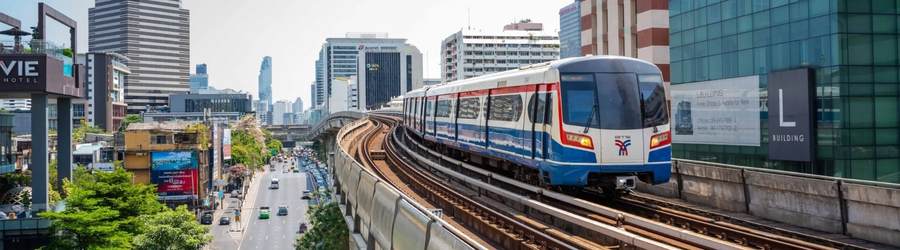
Navigating transport in Bangkok can be a real challenge for travelers, especially when facing the city’s legendary traffic jams. Fortunately, mastering the modern Metro in Bangkok Thailand is the ultimate game-changer to save time and travel smoothly. Whether you are hopping on the elevated BTS Skytrain Bangkok to cruise past major shopping districts or diving underground with the efficient MRT Bangkok, the rail system offers a fast, air-conditioned, and incredibly reliable escape. Ready to beat the gridlocks like a local ? Dive into our comprehensive Bangkok metro guide to explore the Thai capital with absolute confidence !
What Should You Know About Metro In Bangkok Thailand ?
- I. Why use the metro in Bangkok during your trip ?
- II. Bangkok BTS - all you need to know about the Skytrain
- III. How does the Bangkok MRT (underground metro) work ?
- IV. What is the difference between the BTS and the MRT in Bangkok ?
- V. How to take the metro in Bangkok ?
- VI. Practical tips for using public transport in Bangkok
I. Why use the metro in Bangkok during your trip ?
Bangkok is a vibrant, dazzling metropolis, but it is also notorious for one major headache: its legendary, gridlocked traffic jams. Getting stuck in a taxi or a traditional tuk-tuk during peak hours can quickly eat away hours of your precious vacation time. This is exactly why mastering the modern Metro in Bangkok Thailand is an absolute game-changer for international travelers looking to maximize their stay.
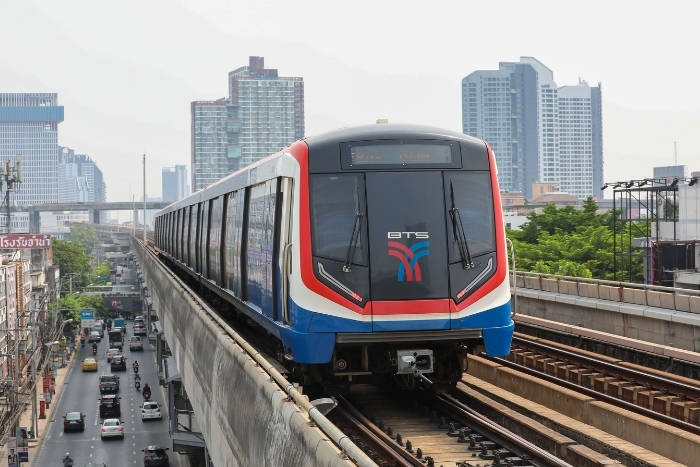
Choosing the city's advanced rail network over the chaotic roads is the ultimate shortcut to a stress-free holiday. Here are the major benefits of prioritizing the transit system for your transport in Bangkok:
- Ultimate time saver: While cars sit completely frozen on roads like Sukhumvit or Silom, the trains glide past the traffic on fixed schedules. A journey that takes 45 minutes by taxi can often be completed in just 10 minutes on the rails.
- Highly budget-friendly: Taxi fares can add up quickly, especially when meters tick away in standstill traffic. The Bangkok metro offers clear, distance-based pricing that allows you to traverse the entire city center for just a few dollars.
- Escaping the tropical heat: Bangkok's humidity can be exhausting. Every single station concourse and train carriage is equipped with powerful, industrial-strength air conditioning, offering a refreshing, cool sanctuary between your sightseeing stops.
- Unmatched predictability: Unlike buses or taxis that are subject to weather delays and road accidents, the electric lines operate with military-grade punctuality. You can plan your day down to the minute.
Whether you are hunting for world-class street food, visiting ancient heritage temples, or heading to a luxury shopping mall, relying on the electric rail lines is the smartest way to travel. It transforms your travel experience from an exhausting commute into a smooth, seamless breeze.
II. Bangkok BTS - all you need to know about the Skytrain
The BTS Skytrain Bangkok is the elevated, rapid transit system that glides smoothly right above the city’s busiest avenues. Because it operates on high concrete viaducts, it offers riders a fantastic, bird's-eye view of Bangkok's futuristic skyline while completely flying over the chaotic traffic below. It stands as the absolute backbone of urban transport in Bangkok for millions of daily commuters and international visitors alike.
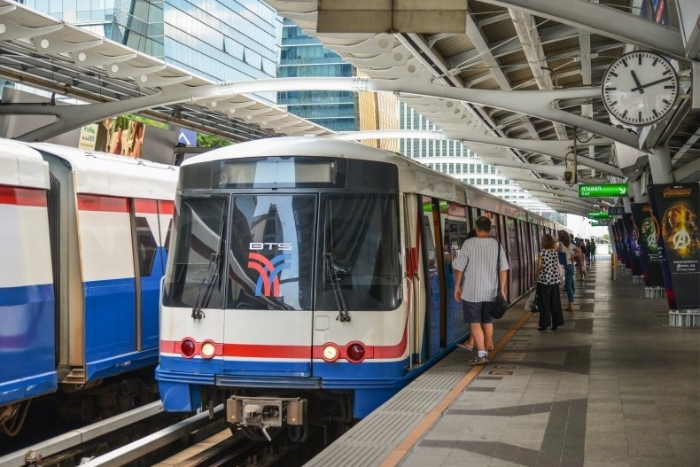
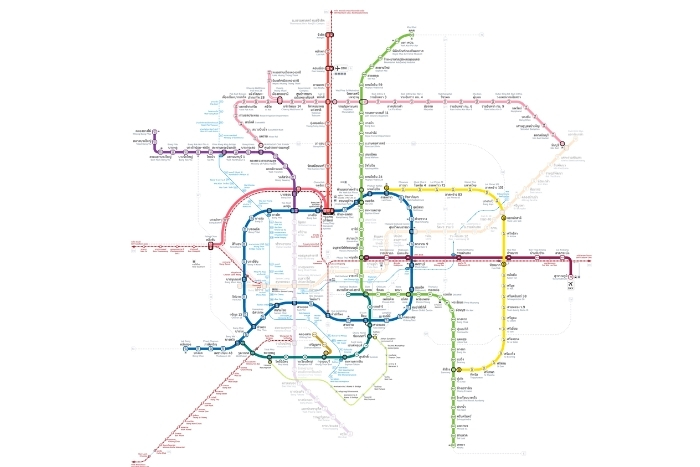
For tourists, using this major section of the Bangkok metro is incredibly convenient as it connects the city's main commercial, shopping, and nightlife districts via two primary routes:
- The Sukhumvit Line (Light Green Line): This massive line is the ultimate tourist route. It runs directly through major transit hubs like Siam (the central shopping mall interchange), Asok, Phrom Phong, and Ekkamai. Whether you want to visit the themed Terminal 21 mall, explore upscale shopping centers like EmSphere, or dive into the city's famous dining scenes, this line takes you right to the doorstep. It also stretches north to Mo Chit, providing direct access to the famous Chatuchak Weekend Market.
- The Silom Line (Dark Green Line): This route cuts through the bustling Silom and Sathorn financial districts, heading toward the western side of the river. For travelers, its most crucial stop is Saphan Taksin station. This station connects directly to the Sathorn Central Pier, where you can easily hop on the Chao Phraya Express Boats or free hotel shuttles to visit iconic historic sites like Wat Arun, Wat Pho, and the grand ICONSIAM riverside mall.
To enhance your experience, this Bangkok metro guide highly recommends purchasing a rechargeable Rabbit Card at any station ticketing counter. It allows you to tap through the gates instantly and bypass the long coin-only ticket lines during hot afternoons. Beyond the main lines, the BTS network also features smaller offshoots like the Gold Line, which connects directly to ICONSIAM, and the Siam Interchange Station, where the Sukhumvit and Silom lines meet on two different levels. Navigating the platforms inside the carriage is highly intuitive, thanks to clear electronic route displays located right above the doors that highlight upcoming stops in real-time.
III. How does the Bangkok MRT (underground metro) work ?
While the Skytrain dominates the skies, Bangkok's MRT (Mass Rapid Transit) reigns supreme beneath the capital. An essential complement to the elevated network, this Bangkok metro is entirely underground, modern, and offers formidable efficiency for traversing the city from one end to the other. For travelers eager to learn all about the city's transit system, the MRT Bangkok is the preferred network for immersing oneself in local history, as it serves traditional and cultural districts that the elevated train cannot reach.
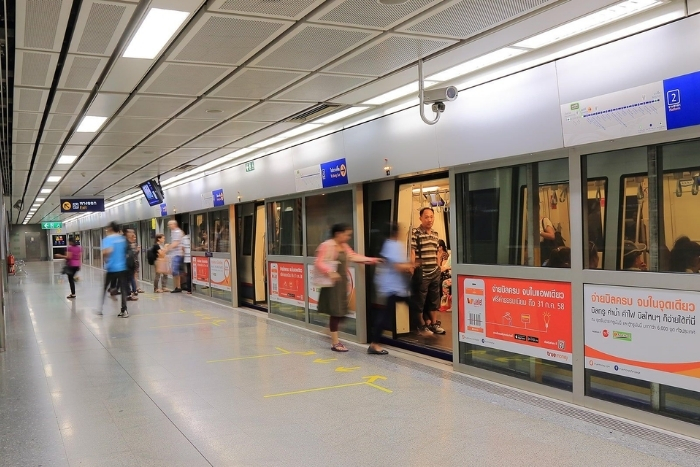
Unlike the elevated network, the underground network is distinguished by its spacious stations and infrastructure designed to handle large passenger flows. The network is primarily divided into two lines, although the first is the most crucial for your sightseeing itinerary:
- The Blue Line: This is the MRT's main circular line and the most useful for vacations. It forms a loop that connects the modern city center to the historic districts of the old city (Rattanakosin). By taking this line, you can reach essential stops like Kamphaeng Phet (which provides direct and quieter access to Chatuchak Market), Sukhumvit (the major interchange station with the BTS skytrain Bangkok), Silom, and especially Hua Lamphong (the historic central station) and Sam Yan. Further west, it serves the magnificent stations of Wat Mangkon (in the heart of vibrant Chinatown) and Sanam Chai, the closest station to the splendid Wat Pho temple and the Grand Palace.
- The Purple Line: Located further out, this line primarily serves residents of Bangkok's northwestern suburbs (Nonthaburi province). Although less busy for tourists, it still connects smoothly to the Blue Line via the Tao Poon interchange station, making it highly accessible if you wish to venture off the beaten path.
This comprehensive Bangkok metro guide wouldn't be complete without mentioning how easy this network is to use. To access the platforms, the system doesn't use paper tickets but small black plastic tokens equipped with a contactless chip, or dedicated magnetic cards. Also noteworthy is excellent news for users of transport in Bangkok: the MRT gates accept direct payment by bank card (Visa or Mastercard in contactless mode), saving you from queuing at ticket machines during peak hours. Incorporating the underground network into your travel routine ensures a smooth, fast, and completely safe journey through the Metro in Bangkok Thailand.
IV. What is the difference between the BTS and the MRT in Bangkok ?
For many first-time visitors, understanding transport in Bangkok can lead to a bit of confusion, particularly when trying to distinguish between the two main rail networks. While they seamlessly map out the city together, the most critical golden rule to remember for your trip is this: the BTS and the MRT are operated by entirely separate private companies. Because they are separate corporate entities, their ticketing systems remain completely independent. You cannot ride the underground subway using a BTS ticket, nor can you tap into the Skytrain using an MRT smart card. To help you seamlessly plan your journeys and avoid any rookie mistakes, here is a practical, side-by-side comparison matrix compiled by our Bangkok metro guide:
| System Features | The BTS Bangkok (Skytrain) | The MRT Bangkok (Subway) |
| Physical Infrastructure | Fully elevated above the streets (Sky) | Mostly underground beneath the city |
| Main Tourist Lines | Sukhumvit Line / Silom Line | Blue Line / Purple Line |
| Single-Journey Ticket | Magnetic paper card | Round, black plastic token |
| Rechargeable Smart Card | Rabbit Card (Very popular) | MRT Plus Card |
| Contactless Bank Pay | No (Counter or kiosk ticket purchase only) | Yes! Direct tap with Visa / Mastercard |
| Operating Hours | From 06:00 AM to Midnight daily | From 06:00 AM to Midnight daily |
| Average Ticket Cost | 17 to 62 Baht (Distance-based) | 17 to 50 Baht (Distance-based) |
To truly master the Bangkok metro landscape, you need to keep in mind three technical details that often surprise international tourists during their first few days using transport in Bangkok:
- No single combined ticket: If you need to start your journey on the elevated BTS network and end it on the underground MRT network, your journeys are not combined onto a single transit pass. You must completely exit the BTS gates, walk across the concourse, buy a brand-new token or ticket, and then enter the MRT system.
- One credit card per person on the MRT: Although paying by credit card (Visa/Mastercard) is extremely convenient on the MRT Bangkok network, each passenger must carry their own physical card. The automated system strictly records your specific entry and exit stations to calculate the distance-based fare. Therefore, it is technically impossible to use the exact same credit card to validate the journey of two consecutive people at the turnstiles.
- Strategic interchange stations: Although the networks are corporately separate, they intersect seamlessly at strategic locations via enclosed, pedestrian overpasses or walkways. For instance, the busy Asok BTS station is directly connected to the Sukhumvit MRT station via a covered skywalk. Similarly, the Sala Daeng BTS hub connects directly to the Silom MRT station, allowing you to swap systems without stepping onto the busy roads.
Now that you have all the insider details you need to differentiate between these two major rail lines, you possess the basic knowledge necessary to navigate the Metro in Bangkok Thailand and get around the capital like a true local.
V. How to take the metro in Bangkok ?
Navigating a massive transit system in a bustling foreign capital can feel intimidating at first, but using the Metro in Bangkok Thailand is surprisingly easy once you know the basic steps. To help you travel like a seasoned local from your very first day, here is a complete, step-by-step walkthrough of the entire process.
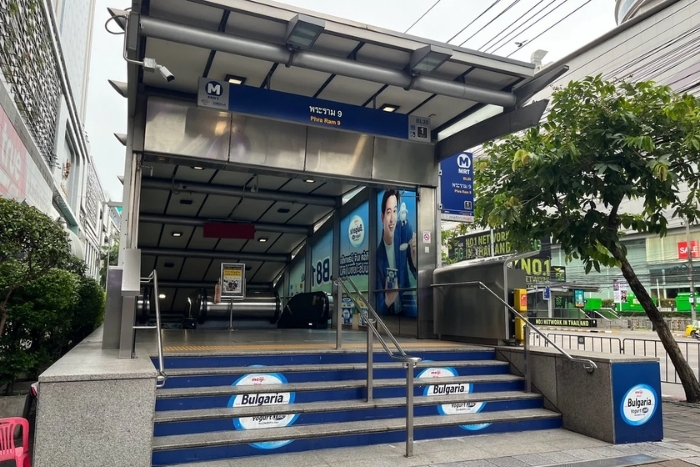
1. Locate the station
Before you can ride, you need to find your way into the network. Fortunately, Bangkok metro stations are highly visible from street level, no matter where you are in the city center. If you are looking for the BTS skytrain Bangkok, simply look up, you will easily spot the massive concrete viaducts running directly above the main avenues, with wide staircases, escalators, and glass elevators leading up to the concourse. For the underground MRT Bangkok, look for prominent colored signs at street level pointing down into modern pedestrian underpasses. Most stations are strategically positioned near major shopping malls, hotel districts, and tourist attractions, making them incredibly easy to access on foot.
2. Buy your ticket
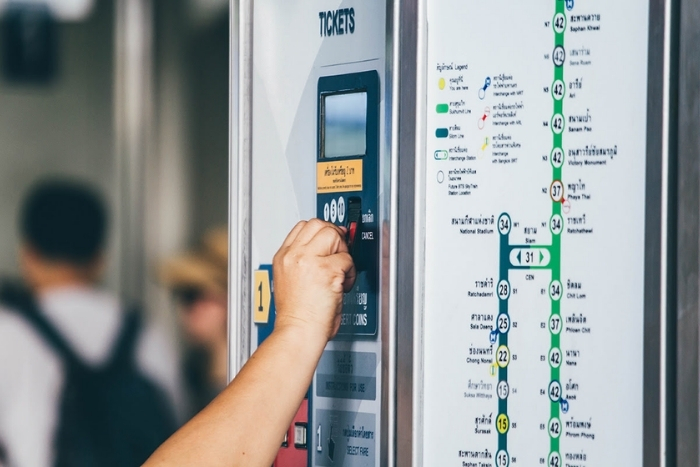
Once you step inside the station concourse, head toward the automated ticketing area. Depending on your travel frequency and convenience preferences, you can secure your ride pass in three hassle-free ways:
- Single-journey tickets or tokens: Walk up to any touch-screen automated kiosk. Tap the "English" flag icon in the top right corner to switch the language, select your desired destination station on the interactive network map, and the screen will display your exact fare. Insert your coins or cash notes, and the machine will dispense your ride pass, a magnetic paper card for the BTS or a small, round black plastic token for the MRT.
- Rechargeable transit cards: If you plan on staying in the capital for more than a few days and want to bypass the daily ticketing queues entirely, this Bangkok metro guide recommends buying a Rabbit Card for the BTS at any manned station window.
- Direct contactless payment (MRT Only): You can skip the ticket kiosks entirely on the underground network by simply preparing your personal contactless Visa or Mastercard to tap directly at the turnstiles.
3. Go through the turnstiles and choose the correct direction
Once you have your ticket, token, or bank card ready, approach the automatic entry barriers. Tap your card or token flat against the designated electronic sensor pad, wait for the green light, and the gates will slide open.
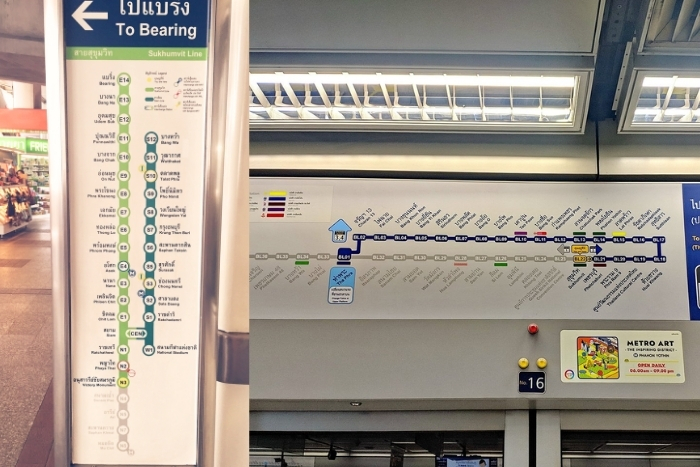
Keep your ticket or token safely in your pocket during your entire journey! You are strictly required to scan your card or insert your plastic token into the slot at your final destination gate to exit. If you accidentally lose it during the ride, you will have to pay the maximum fare penalty at the information desk to be let out. After passing the turnstiles, it is time to head to the platforms. To ensure you board the train heading the right way, look closely at the large overhead direction maps before going up the stairs:
- Upcoming Stations (The direction the train is heading) are always written in BOLD or vibrant colors.
- Past Stations (Where the train has already been) are grayed out, faded, or crossed out.
Locate your destination on the platform map. If the text is written in bold, follow the arrows to that specific platform, step onto the train, and enjoy your smooth ride across the capital!
VI. Practical tips for using public transport in Bangkok
To ensure your journeys through the Thai capital are completely seamless, it helps to know a few insider rules before tapping through the gates. Keeping these practical tips and cultural etiquettes in mind will help you navigate public transport in Bangkok like a seasoned professional:
- Avoid peak commuter hours: While the trains run smoothly all day, try to avoid traveling between 07:30 AM - 09:30 AM and 05:00 PM - 07:30 PM. These are the rush hours when local commuters pack the carriages tightly, and lines at the ticket kiosks can get exceptionally long.
- Prepare for thermal shock: Bangkok's outdoor humidity can be exhausting, but the train interiors are blasted with industrial-strength air conditioning. This Bangkok metro guide highly recommends carrying a light scarf or a thin jacket in your daypack to stay comfortable during longer rides.
- No food or drinks allowed: To keep the entire network pristine, eating and drinking are strictly banned past the security checkpoints. This includes sipping from open water bottles, carrying hot coffees, or chewing gum. Security guards at the baggage check will politely ask you to finish or pack them away.
- Respect local cultural etiquette: Always give up your seat to the elderly, young children, pregnant women, and Buddhist monks. Women must be especially mindful never to sit directly next to, or accidentally touch, a monk or his saffron robes due to local religious customs.
- Stand on the correct side of escalators: When moving through the busy stations, the local convention is to stand stationary on the left side of the escalator and leave the right side open for commuters who are walking or in a hurry.
Mastering the Metro in Bangkok Thailand is undoubtedly the best decision you can make to elevate your vacation. By seamlessly combining the elevated BTS Skytrain Bangkok with the underground efficiency of the MRT Bangkok, you can completely bypass the city's notorious traffic jams and explore every cultural gem with ease. Armed with this practical Bangkok metro guide, you are now fully equipped to navigate the city center safely, affordably, and comfortably. For a truly seamless, tailor-made holiday through the kingdom, feel free to connect with Autour Asia, your dedicated Thailand travel agent, to craft your perfect itinerary !
- Thailand Packing List
- Thailand package 10 Days
- Thailand Tours
- Thailand Travel Guide
No, it is impossible to use a single combined ticket. Since the BTS Skytrain Bangkok (elevated) and the MRT Bangkok (underground) are operated by entirely separate private companies, their ticketing systems remain completely independent. When transferring between networks, you must exit the turnstiles of the first system and purchase a new transit pass (ticket or token) to enter the second. To save precious time while navigating transport in Bangkok, we highly recommend using a rechargeable Rabbit Card for the BTS and your personal contactless credit or debit card directly at the MRT gates.
The budget for a trip to Phuket largely depends on your personal travel style, but the island offers excellent options tailored to every type of traveler. Between accommodation, local transportation, dining, and activities, it is entirely possible to enjoy Phuket on a reasonable budget or treat yourself to a highly luxurious stay. Before catching your flight, it is always recommended to estimate your daily expenses based on your trip duration and planned excursions to seamlessly organize your holiday on Thailand's largest tropical island.
For a first-time, Thailand in 14 days, the ideal itinerary combines the country's ultimate must-see highlights while perfectly balancing rich culture, ancient history, breathtaking nature, and beach relaxation. A classic route including Bangkok, Ayutthaya, Kanchanaburi, Chiang Mai, Chiang Rai, and a tropical island like Koh Chang allows you to experience the diverse facets of the kingdom without spending too much time in transit. This well-rounded formula offers a complete travel experience packed with sacred temples, vibrant local markets, misty mountain landscapes, and pristine beaches
Related travel guide
Other similar articles


CUSTOMIZABLE BY LOCAL EXPERTS
Personalized trip at the original price!

REFUND GUARANTEE
We believe in our work and promise to give you money back.

GOOD PRICE / QUALITY
95% satisfied more than expected!

24/7 LOCAL SUPPORT
We are always available online to provide assistance at any time.

Most read articles


Autour Asia is highly recommended on
Embracing the mission of "Satisfied more than expected" and providing authentic experiences, we have received numerous recommendations on reputable travel forums: