
Mae Hong Son Loop 3-day From Nina's Perspective
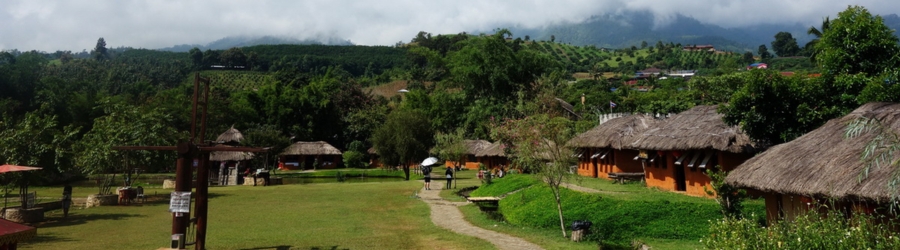
The Mae Hong Son Loop 3-day family trip will remain one of my most beautiful travel memories in Thailand. Located in the far northwest of the country, on the border with Myanmar, this legendary loop was an opportunity to discover a wild and unspoiled region, far from the usual tourist routes. Between spectacular mountain roads, authentic villages, peaceful temples and breathtaking landscapes, every stop left me in awe. If you're wondering how to organize this road trip and which stops to prioritize, here is my 3-day Mae Hong Son Loop itinerary, along with all the tips that made this adventure unforgettable.
3-day Mae Hong Son Loop
I. Things to know before coming to Mae Hong Son
The car
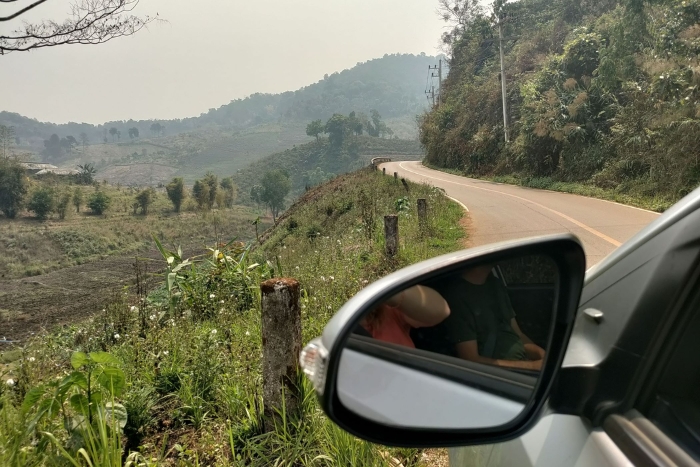
I rented a car at Chiang Mai airport, which proved very convenient for following the Mae Hong Son Loop 3-day family route without constraint. The price was around 1,000 baht per day, which was very reasonable. One important tip I had read: it was essential to choose a car with at least a 1.4-liter engine, as the roads in the North are demanding with significant elevation changes. I also brought a GPS, even though the loop is actually very easy to follow - there is essentially only one road.
The duration
The complete Mae Hong Son Loop 3-day circuit amounts to approximately 12 hours of driving in total, or about 3 hours per day. This left plenty of time to explore each stop without feeling rushed - a significant advantage when traveling with children. However, since there are many stops worth taking, it is preferable to plan at least four days to fully enjoy the route.
The map
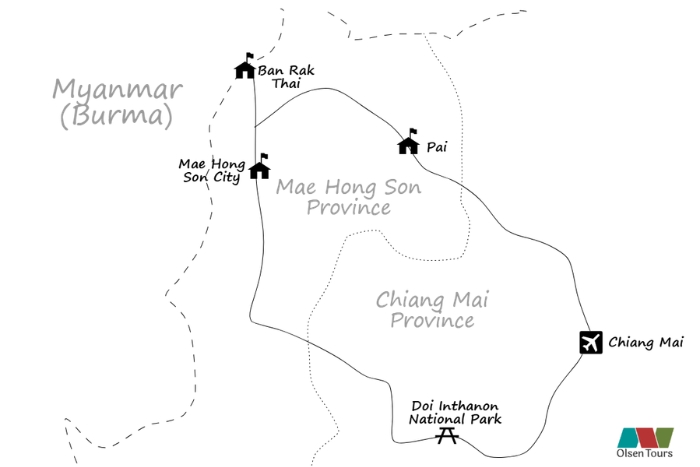
Between Chiang Mai and Mae Hong Son, the road officially features 1,864 curves through tropical forests and mountain ranges. Some family members had slightly sensitive stomachs… I planned frequent breaks so that everyone could enjoy the scenery without discomfort.
Weather on the Mae Hong Son Loop 3-day trip
The best time to visit Mae Hong Son on a 3-day loop runs from November to February. This season is known as the most favorable for completing the loop, thanks to its pleasant temperatures, clear skies, and dry roads.
II. Mae Hong Son Loop 3-day itinerary
1. Day 1: Chiang Mai - Mae Hong Son via Doi Inthanon
Royal Agricultural Station Inthanon
Our first day of the 3-day Mae Hong Son Loop started early from Chiang Mai, heading toward Doi Inthanon National Park. Our first stop was the Royal Agricultural Station of Inthanon. I didn't expect to discover such a colorful and inspiring place so early in the morning. Bright flower beds, carefully cultivated vegetables and a variety of fruits made up a living, harmonious tableau. This research station is dedicated to winter plants, ornamental flora, and mountain fish farming, while actively supporting farmers from the surrounding hill tribes.
Wachirathan Waterfall
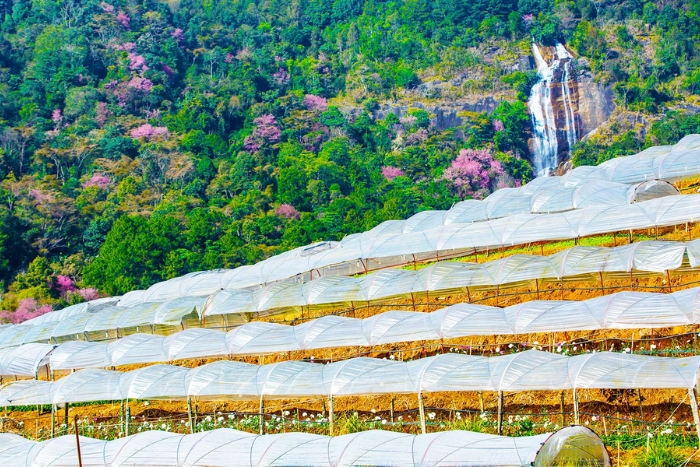
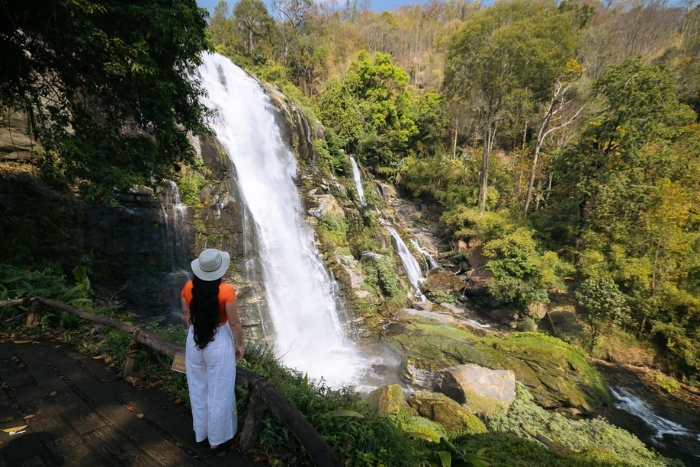
A few kilometers away, we arrived at Wachirathan Waterfall, a must-see during our Mae Hong Son Loop 3-day trip. This 70-meter fall crashes powerfully onto jagged rocks, generating a refreshing mist and beautiful rainbows in the sunlight. The surrounding tropical forest gives it an almost magical atmosphere. My children were enchanted. The waterfall flows year-round, but the rainy season makes it even more spectacular.
The Royal Twin Pagodas
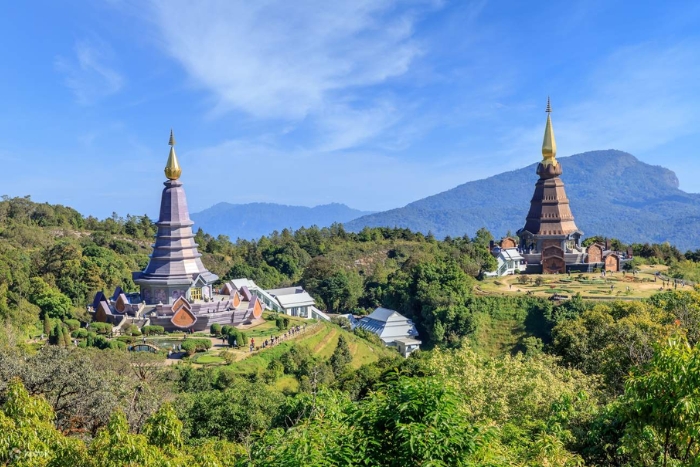
After the waterfall, the road climbed toward the famous Royal Twin Pagodas: Phra Mahathat Napamethanidol and Phra Mahathat Naphaphonphumisiri. These two majestic Buddhist structures stand at the mountaintop and offer a breathtaking panorama over the surrounding valleys. The first pagoda was built in 1987 in honor of King Rama IX on his 60th birthday, and the second in 1992 in honor of Queen Sirikit for the same occasion. The flowering gardens surrounding them, with their colorful winter plants, add a touch of grace and serenity to this already deeply moving place.
Doi Inthanon - The Roof of Thailand
The highlight of this first day, and of our entire 3-day Mae Hong Son Loop, was the ascent of Doi Inthanon, the roof of Thailand at 2,565 meters. Part of the Thanon Thongchai range, which extends from the Himalayas, this legendary summit offers incredibly diverse landscapes: dense tropical forests, serene pine groves, and exceptional birdlife that delights ornithology enthusiasts. At the summit, a memorial dedicated to King Inthawichayanon - a former ruler of Chiang Mai and a pioneer of environmental conservation - bears witness to the deep link between nature and culture in this region. We ended the day by arriving in Mae Hong Son, where we checked into our hotel, exhausted but happy.
2. Day 2: Mae Hong Son - Ban Rak Thai - Pang Oung - Pai
Su Tong Pae Bamboo Bridge
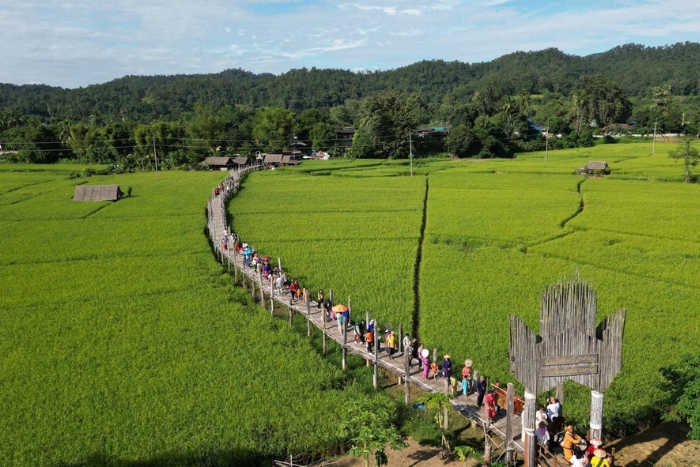
The second day of our Mae Hong Son Loop 3-day trip, we began with the unmissable Su Tong Pae bamboo bridge, the longest bamboo bridge in Thailand at 500 meters. It connects Suan Tham Phusama Temple to the village of Kung Mai Sak, stretching over peaceful rice fields and canals. Walking across this bridge at sunrise was a meditative experience: the gentle sway of bamboo, the rustling of leaves, golden reflections on the water. In winter, the yellowed fields and misty mountains create an unforgettable postcard-worthy scene.
Ban Rak Thai Village
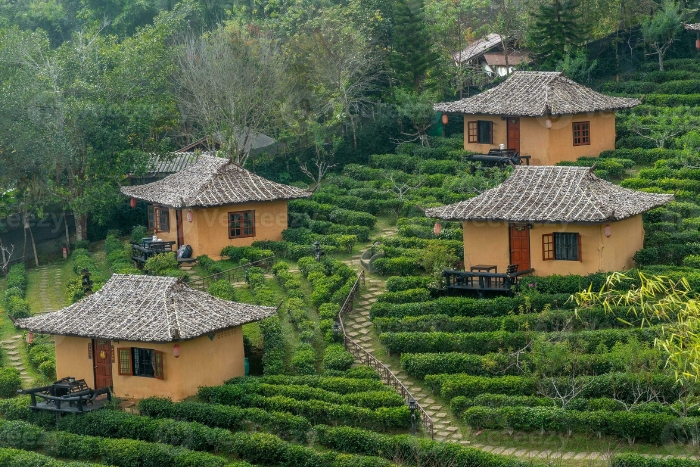
Our route then led us to the charming village of Ban Rak Thai, one of the top must-see stops on the Mae Hong Son Loop. This extraordinary village is home to descendants of soldiers from the 93rd Nationalist Division, who took refuge here in the 20th century after fleeing the communist regime. Their Yunnanese heritage is everywhere: traditional architecture with delicate carvings, narrow lanes adorned with red lanterns, and above all… premium Chinese tea of exceptional quality. We spent a delightful time in a tea house, savoring a fragrant cup accompanied by Yunnanese culinary specialties.
Pang Ung - Switzerland in Thailand
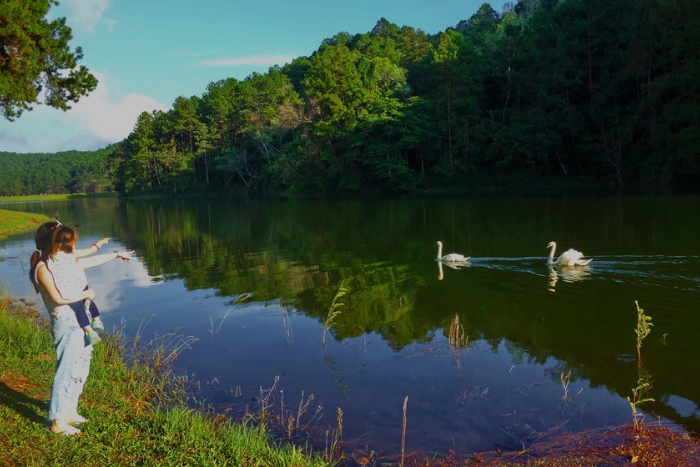
From Ban Rak Thai, we continued on to Pang Ung, a must-see on our Mae Hong Son Loop 3-day route, aptly nicknamed the "Switzerland of Thailand." This Shan village is home to a reservoir framed by pine-covered mountains, with a veil of morning mist that creates an almost surreal atmosphere. The cool climate and surrounding tranquility make it a true sanctuary of peace, ideal for recharging before continuing the journey.
Lahu Village of Ban Jabo
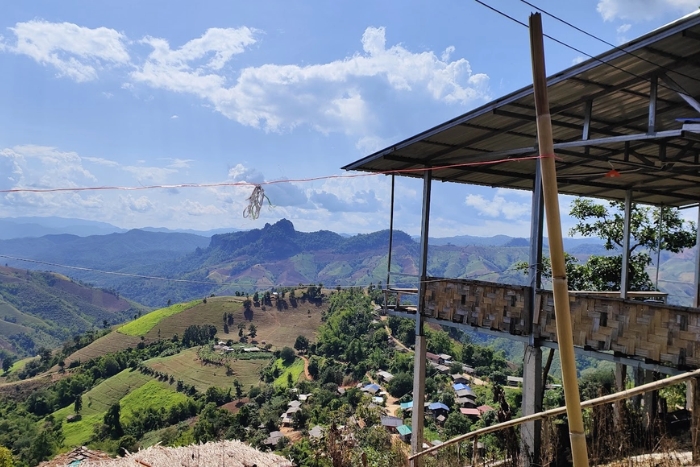
Before reaching Pai, we made a detour to the Lahu village of Ban Jabo, perched on a ridge with panoramic views over the lush valleys. The Lahu people, originally from Tibet, migrated to northern Thailand centuries ago. Their animist traditions and deep respect for nature are felt on every street corner. We were warmly welcomed by the locals, who were proud to share their culture through their brightly colored traditional clothing, ancestral farming practices, and craftsmanship. This sincere human connection was exactly the type of experience I was looking for on this circuit.
Doi Kiew Lom Viewpoint
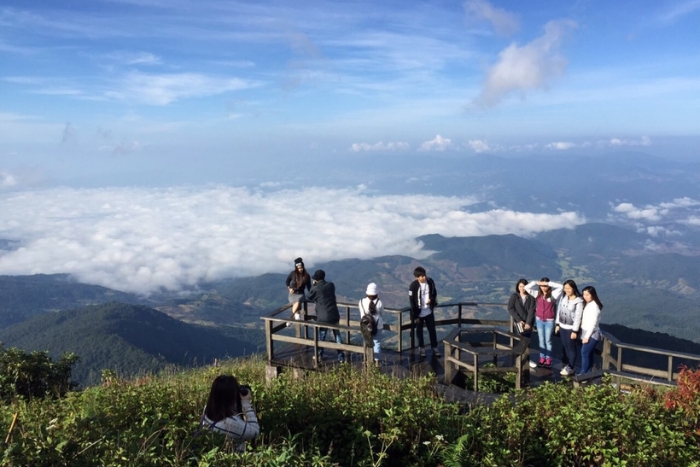
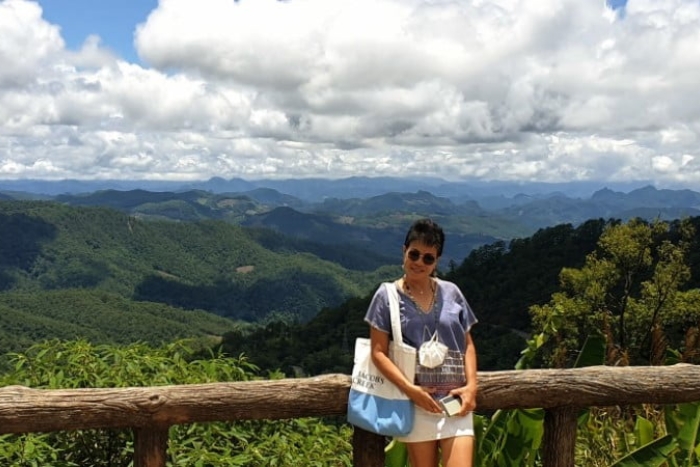
Late in the afternoon, we stopped at the Doi Kiew Lom viewpoint, located between the districts of Pang Mapha and Pai. The spectacle before us was simply magical: a sea of mist enveloped the valleys while endless mountain ridges stretched out along the horizon. As the sun began to set, the clouds turned shades of orange and gold - a natural tableau of stunning beauty. Colorful flowers adorned the viewpoint, adding a romantic touch to this suspended moment.
Pai Walking Street
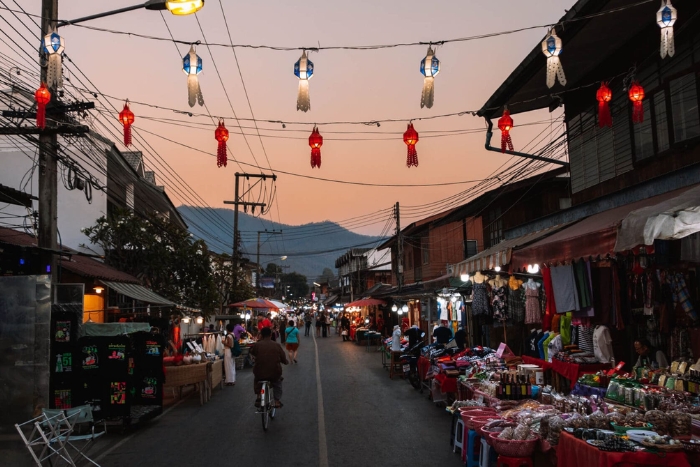
The evening ended festively on Pai's walking street, open from 5 PM to midnight. This lively street is full of stalls selling handicrafts, jewelry, clothing, and handmade souvenirs. The aromas of Thai and international cuisine mingled in the air as we strolled among the colorful stands - a wonderful way to close an intense day by immersing ourselves in Pai's local culture.
3. Day 3: Pai - Chiang Mai
Santichon Village and Yun Lai Viewpoint
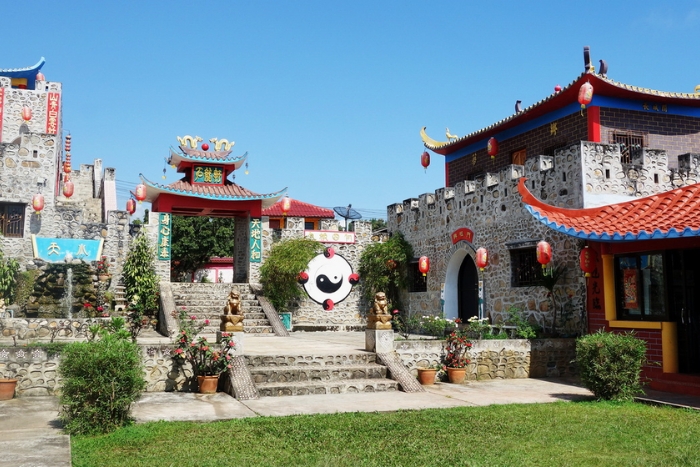
For the last day of our 3-day Mae Hong Son Loop, we started at Santichon village, a living testament to Yunnanese culture near Pai. Red lanterns, tea houses, noodles and dim sum Yunnan-style - the atmosphere reminded us of Ban Rak Thai, but with a different flavor. Right next door, the Yun Lai viewpoint offers a panorama of Pai and its rice fields, particularly magical when morning mist settles across the valleys.
Wat Phra That Mae Yen
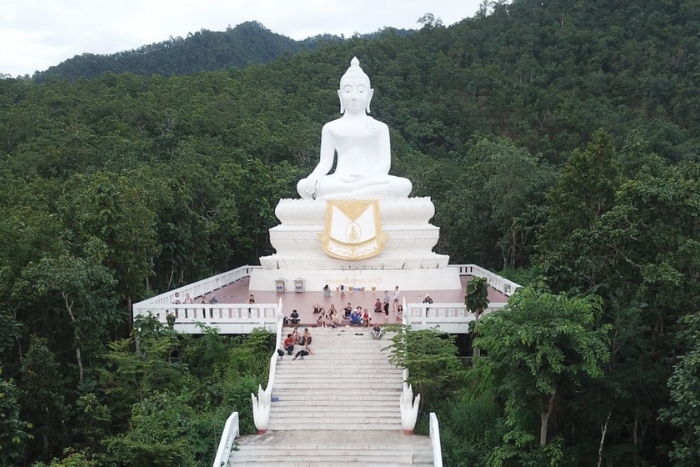
We then climbed the steps of Wat Phra That Mae Yen, a Buddhist temple perched on a hill overlooking Pai. The ascent was gentle and meditative, accompanied by the rustling of trees. At the top, a monumental white Buddha statue watches over the valley with soothing serenity. The panoramic view over Pai and its lush surroundings was superb. This place radiated a deep peace that invited us to slow down and appreciate the present moment.
Pai Canyon (Kong Lan)
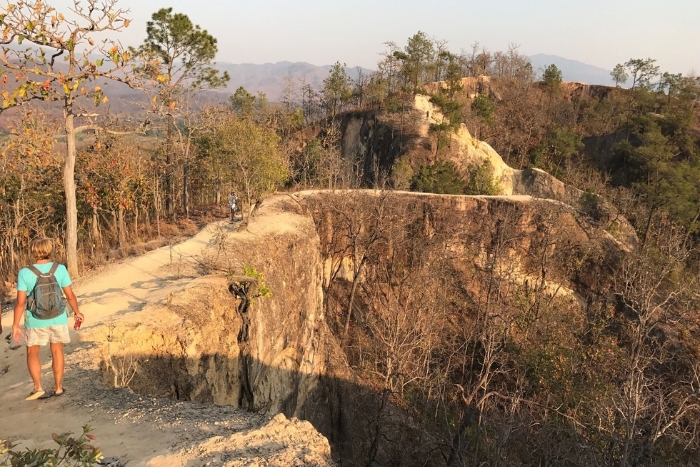
Pai Canyon, also known as Kong Lan, was one of the pleasant surprises of our Mae Hong Son Loop 3-day trip. Shaped by erosion, this site reveals a landscape of deep ravines, steep cliffs and narrow ridges across more than three hectares. The winding trails are for adventurous souls - I'll admit a few thrills on the vertiginous sections - but the view over the villages and mountains below is well worth the effort.
Pong Duet Geyser Hot Springs
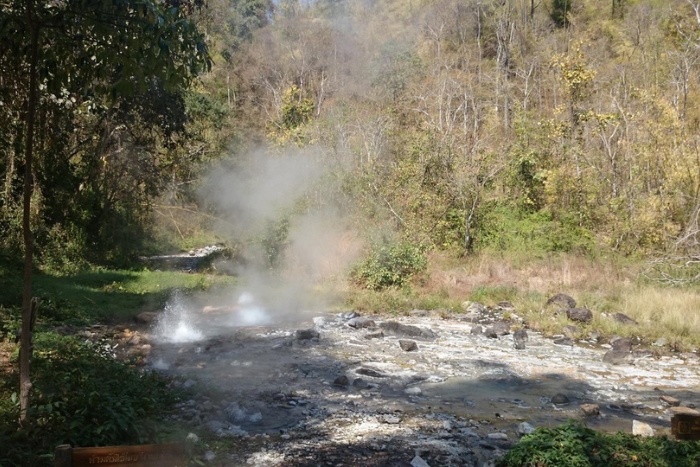
Our last stop before Chiang Mai was the Pong Duet Geyser hot springs in the Mae Taeng district. This is the largest natural geyser in northern Thailand: jets of steam shoot 1 to 2 meters into the air from underground water heated to 170-200°C. A 1.5-kilometer nature trail winds through dense jungle among peaceful ponds, lined with ferns, mosses and majestic trees. A relaxing and educational walk - the perfect way to end a Mae Hong Son Loop 3-day family adventure gently.
This Mae Hong Son Loop 3-day trip is a gem for travelers in search of authenticity, nature and cultural diversity in northern Thailand. I highly recommend it to families, nature lovers, and anyone who wants to go beyond Chiang Mai to discover the real Thailand. And to organize your trip to Mae Hong Son, I wholeheartedly recommend Autour Asia - a travel agency in Asia. The Autour Asia team can help you create the perfect itinerary, from transportation to accommodation.
>>> Things to see and do in Mae Hong Son
>>> Mae Hong Son in 24 hours
>>> Mae Hong Son Travel Guide
>>> North Thailand itinerary
>>> Thailand Packages Tours
Both options are popular, but the right choice depends entirely on your travel style and group size. For a 3-day Mae Hong Son Loop trip, a car is strongly recommended over a motorbike, it is safer, more comfortable, and far more practical when traveling with children across 1,864 curves of winding mountain roads. Renting a car at Chiang Mai airport costs around 1,000 baht per day, and choosing a model with at least a 1.4-liter engine is essential to handle the steep elevation changes. Solo travelers and experienced riders, on the other hand, often prefer a motorbike for the freedom and flexibility it offers.
Most travelers complete the Mae Hong Son Loop in 3 to 5 days, and a Mae Hong Son Loop 3-day family trip is absolutely doable for those with limited time. With approximately 3 hours of driving per day across 12 hours total, you'll have plenty of time to explore highlights like Doi Inthanon, Su Tong Pae Bridge, Ban Rak Thai, Pang Ung, and Pai - without ever feeling rushed. However, if you're traveling with young children or prefer a more relaxed pace, extending to 4 or 5 days is recommended, especially given the road's famous 1,864 curves.
The ideal season runs from November to February, when the weather is cool, dry, and especially pleasant for exploring the mountainous scenery. If you're planning a North Thailand itinerary, this is the best time to fully enjoy highlights like Ban Rak Thai or Pang Ung, often veiled in enchanting morning mist. From June to October, rainfall is common, as described in the travel story, but the region remains charming. Just bring a raincoat and check the weather forecast before setting off.
Related travel guide
Other similar articles


CUSTOMIZABLE BY LOCAL EXPERTS
Personalized trip at the original price!

REFUND GUARANTEE
We believe in our work and promise to give you money back.

GOOD PRICE / QUALITY
95% satisfied more than expected!

24/7 LOCAL SUPPORT
We are always available online to provide assistance at any time.

Most read articles


Autour Asia is highly recommended on
Embracing the mission of "Satisfied more than expected" and providing authentic experiences, we have received numerous recommendations on reputable travel forums: