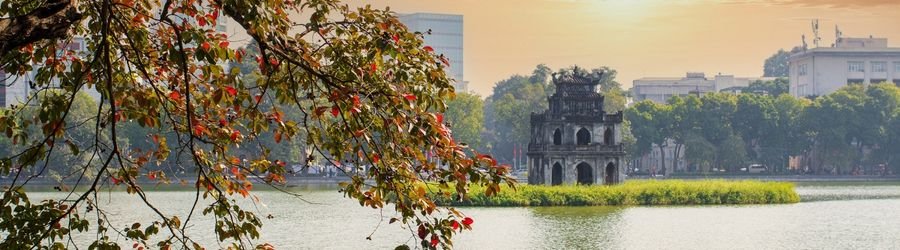
In the heart of Hanoi, some places tell the story and spirit of the Vietnamese capital better than others. Hoan Kiem lake is certainly one of them. Surrounded by trees, historic monuments and lively streets, it is a meeting point between heritage, traditions and daily life. A walk around the lake also allows visitors to experience the unique rhythm of Hanoi, from early-morning tai chi sessions to family walks and the lively atmosphere of the weekend. For travelers who want to discover the capital in a different way, this iconic site deserves a place in any itinerary planned by a Vietnam travel agency. But what is really hidden behind this famous lake?
Formerly known as Luc Thuy Lake, meaning "green waters", Hoan Kiem lake is linked to one of the most famous legends in Vietnam. According to the traditional story, in the early 15th century, King Le Loi received a magical sword that helped him fight the Ming invaders. After his victory, while he was sailing on the lake, a sacred turtle is said to have appeared on the surface and asked for the sword.
The king then returned the sword to the turtle, which disappeared into the depths of the lake. From this event, the lake is said to have received the name Hoan Kiem, which can be translated as "Lake of the returned sword".
Beyond this fascinating story, Hoan Kiem lake holds a special place in the collective memory of Hanoians. It has long been part of the capital’s daily life and remains a popular meeting place for both locals and visitors.
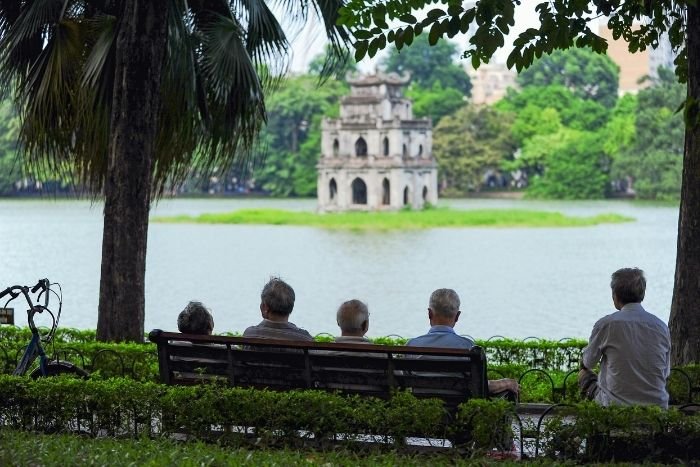
It is hard to imagine a first visit to Hanoi without stopping at Hoan Kiem lake. Located in the heart of the capital, it is an excellent starting point to explore the different sides of the city. From its shores, you can easily reach the Old Quarter, Ngoc Son Temple, small shopping streets and many local places to taste Vietnamese specialties. Among the many answers to the question What to do in Hanoi, walking around the lake is certainly one of the simplest and most enjoyable experiences.
The charm of the lake also comes from its atmosphere, which changes throughout the day. In the morning, Hanoians gather around the lake to walk, run, exercise or practice tai chi. As the day goes on, cafés gradually become busier, while the nearby streets regain their lively atmosphere.
At the weekend, the area takes on a completely different feel. The pedestrian space around the lake and nearby streets allows visitors to enjoy the historic center away from the usual traffic. Performances, cultural activities and outdoor events add to the lively atmosphere. For travelers, it is a great way to experience Hanoi through its daily life, in a more relaxed, friendly and authentic atmosphere.

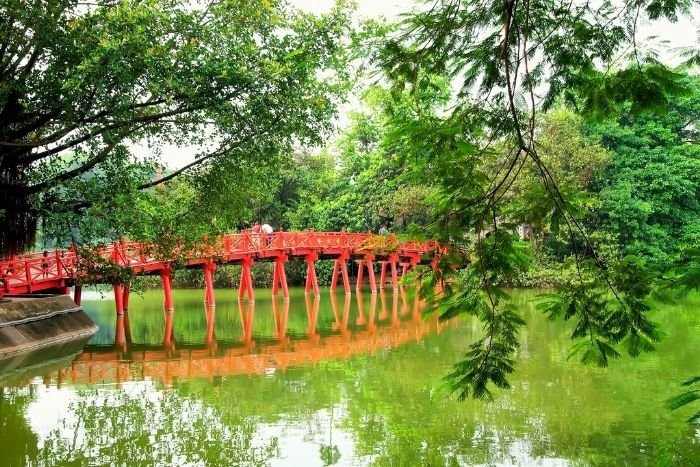
With its bright red structure, The Huc Bridge is one of the most recognizable features of Hoan Kiem lake. Its name can be interpreted as "the place where sunlight is reflected", a poetic name for a bridge that stands out beautifully against the lake’s waters.
It is also a great viewpoint for taking photos before continuing to Ngoc Son Temple.
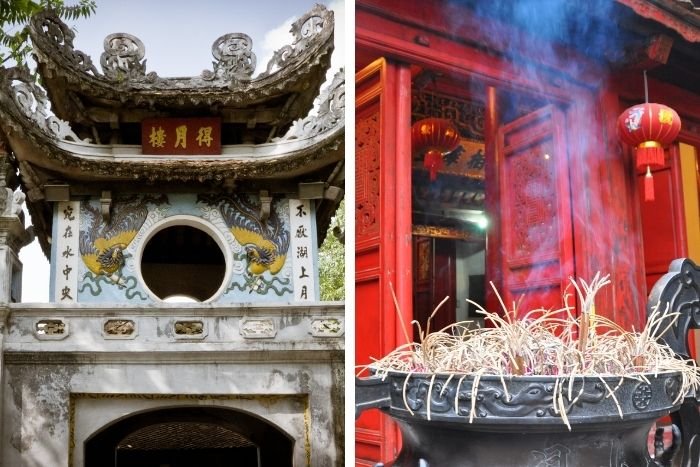
Located in the peaceful waters of Hoan Kiem lake, Ngoc Son Temple seems to float between the sky and the water. To reach it, visitors cross the red The Huc Bridge, one of the most photographed spots in Hanoi. As soon as you enter the temple, the atmosphere becomes quieter, away from the busy streets nearby.
The temple honors several important historical and spiritual figures in Vietnam, including the famous General Tran Hung Dao. Inside, traditional architecture, altars and decorative details offer an insight into Vietnamese beliefs and culture.
The entrance fee is around 50,000 VND, or about 1.93 USD per person. Allow 30 to 45 minutes for the visit. A Vietnam travel agency can also include the temple in a cultural walking tour around the lake, the Old Quarter and Hanoi’s main historical sites.
Ngoc Son Temple is open from 7:00 AM to 6:00 PM from Monday to Friday, and from 7:00 AM to 9:00 PM on Saturday and Sunday, allowing visitors to enjoy an evening visit at the weekend.
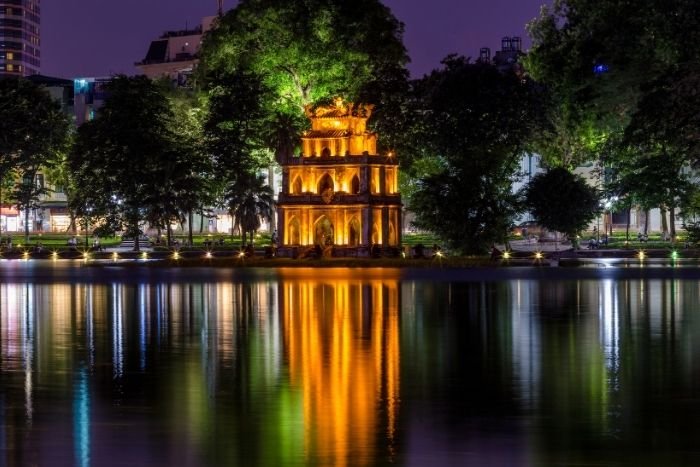
Located on a small island in the middle of Hoan Kiem lake, Turtle Tower, also known as Thap Rua, is closely linked to the famous legend of the returned sword. Although visitors cannot enter the tower, its distinctive silhouette has become one of the symbols of Hanoi.
It looks especially beautiful in the late afternoon, when the light becomes softer and its reflection appears on the calm waters of the lake.
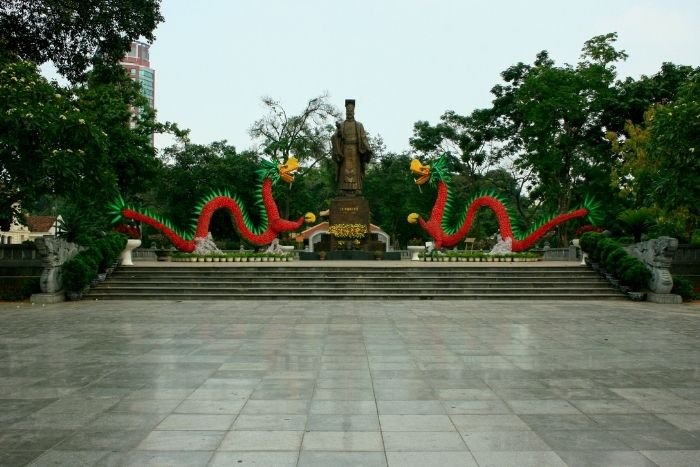
Just a few steps from Hoan Kiem lake, Ly Thai To square offers another view of the historic heart of Hanoi. Dominated by the statue of King Ly Thai To, founder of the Ly Dynasty, the square pays tribute to the ruler who chose Thang Long, present-day Hanoi, as the capital in 1010.
Its large garden provides a pleasant break from the busy city. Among flower beds, trees and walking paths, Hanoians come here to walk, exercise or simply enjoy a quiet moment. For travelers, it is also a lovely starting point for continuing the walk towards Hoan Kiem lake, the Old Quarter and its lively streets.
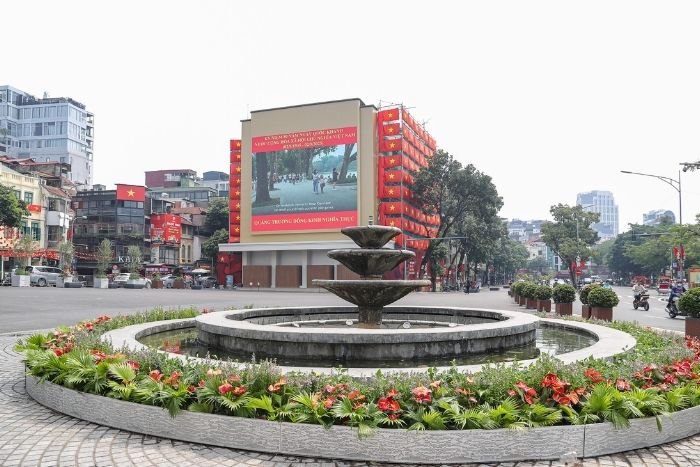
Just a few steps from Hoan Kiem lake, Dong Kinh - Nghia Thuc Square is closely linked to Hanoi’s urban history and modern city life. Its location between the lake and the Old Quarter makes it a natural stop during a walk.
The square also plays an important role in cultural events and activities organized in the pedestrian area. Traditional performances, concerts and artistic events may take place here.
For visitors, this space offers an interesting transition between the peaceful scenery of the lake and the much livelier atmosphere of the old shopping streets.
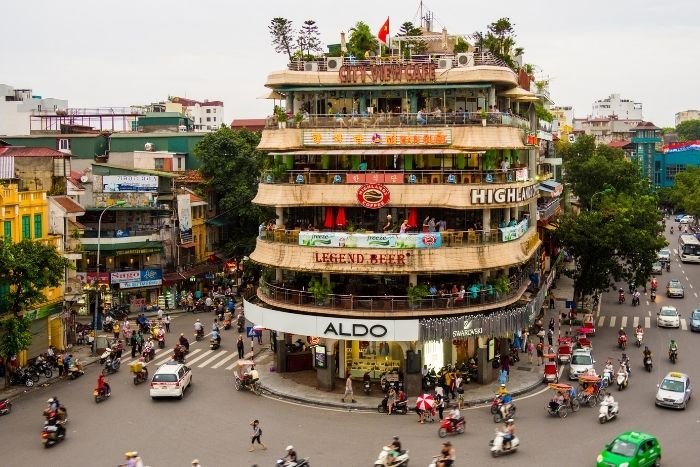
For more than thirty years, a distinctive building stood at one of the best-known corners of Hoan Kiem lake: Ham Ca Map, which literally means "shark jaw". Located at 7 Dinh Tien Hoang Street, opposite Dong Kinh - Nghia Thuc Square and very close to the lake, this commercial building was constructed between 1991 and 1993.
With its six floors and stepped architecture, it quickly became a distinctive feature of the Hoan Kiem area. The building housed restaurants and cafés, while its elevated position offered remarkable views of the lake and the streets of the Old Quarter.
However, its architecture always received mixed reactions. Some Hanoians were attached to it because the building had become part of their memories of modern Hanoi. Others believed that its large structure blocked part of the landscape and did not fit well with the historic surroundings of Hoan Kiem lake.
After more than three decades, Ham Ca Map was finally demolished in 2025 as part of the redevelopment project for Dong Kinh - Nghia Thuc Square. The removal of the building marked a new stage in the development of the area. The goal is now to create more open space and strengthen the public and pedestrian character of this part of central Hanoi.
This transformation is worth noticing for travelers returning to Hanoi after several years. The landscape is changing, but the role of the lake remains the same: a lively gathering place in the heart of the capital.
As Hanoi begins to light up, Hoan Kiem lake takes on a whole new atmosphere. People slow down, conversations mix with the sounds of the city, and the lights gently reflect on the water. It is often at this moment that visitors understand why this place holds such a special place in the hearts of Hanoians. Beyond sightseeing, the lake simply invites you to slow down and take in your surroundings. To experience this atmosphere without following a typical itinerary, choosing a Vietnam travel agency can be a great way to discover Hoan Kiem lake as a true gateway to the soul of Hanoi.






 FR
 ITA
